


Event guest management may sound simple at first. You invite people, they confirm, they arrive. That is how it looks from a distance. But once you start handling a real event, things shift a bit. Names get updated, timings change, a few guests arrive too early, some come late, and a few just show up without any notice.
It turns into a moving process. Not something fixed.
That is where professional event guest management starts to matter. It is not only about handling people at the gate. It is more about keeping things in order without making the place feel strict or uncomfortable. Guests should feel welcome, even when the team is under pressure. And yes, things do go off track sometimes. But a good system helps you settle things quickly. In this blog, we will understand what event guest management is and why it is essential for events.
Definition of Event Guest Management
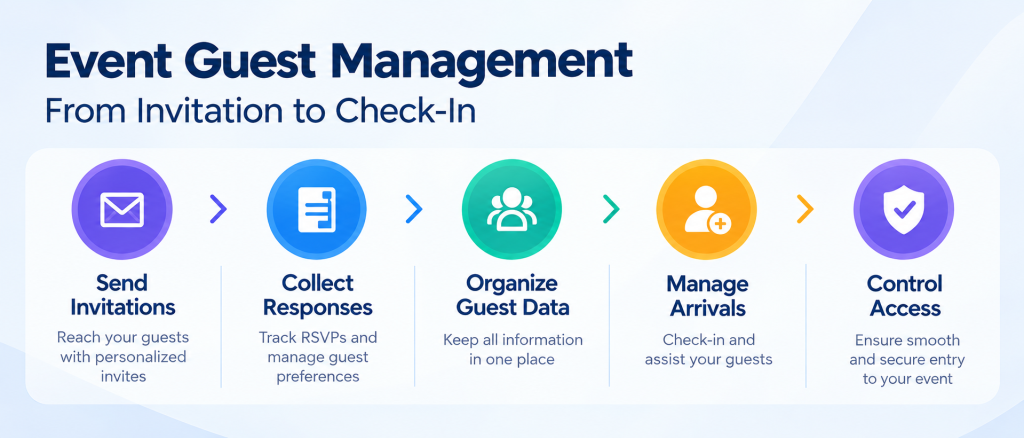
Event guest management covers the full process of handling attendees before, during, and even after the event. It starts with sending invites and does not really end when the event closes. A well-planned registration flow helps organizers collect and manage guest information before they arrive.
It includes things like:
- Sending invitations
- Collecting responses
- Organizing guest data
- Managing arrivals
- Controlling access
A key part of this is event guest list management. At first, it looks like a basic list. Names, numbers, maybe a few notes. But as the event grows, this list becomes the center of everything. One small mistake here, and it shows up later.
Many teams use a visitor management solution to keep things in one place. It helps avoid scattered files or long email threads. When something changes, the update is quick, and everyone stays on the same page.
Then there is VIP guest management. This needs a bit more attention. Not complicated, just more careful. Faster entry, reserved seating, or access to certain areas. If this part is not handled well, it becomes noticeable very quickly.
When guests arrive, guest event check-in solutions take over. They help verify details and keep the line moving. If the entry slows down, everything starts to feel heavy from the start.
After that, event access management controls determine where people can go. Some areas are open, some are not. It keeps the movement smooth without making guests feel stopped all the time.
All of this together forms event guest management. It runs in the background, but it holds the event together.
Why Event Guest Management Matters
Think about an event where nothing feels clear. Staff are checking names repeatedly. Lists are missing details. Guests are waiting in long lines. Questions start coming, and answers are slow.
The mood drops faster than expected.
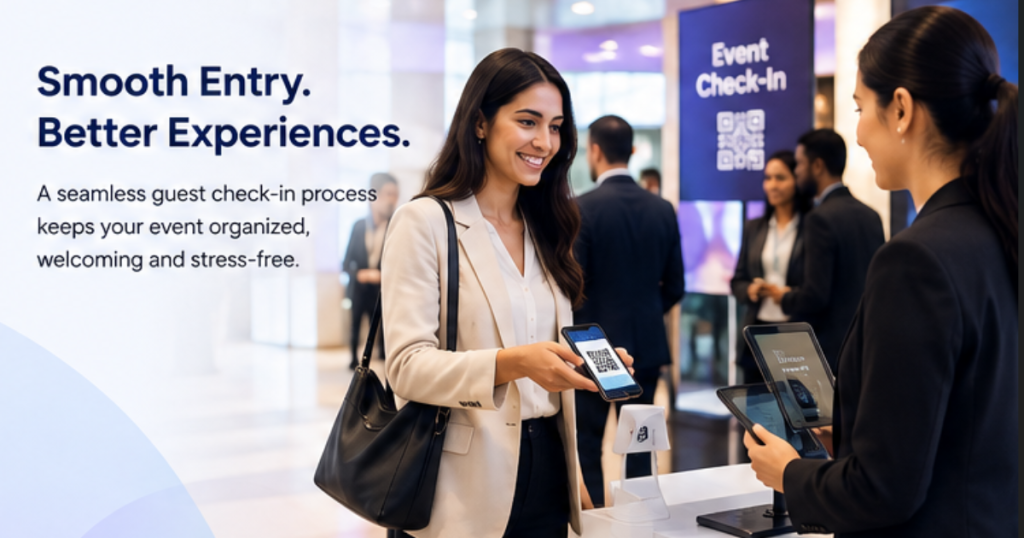
Now think of a different setup. Guests arrive, show their code, and walk in without delay. A streamlined registration and check-in process can help eliminate check-in queues and keep attendee movement smooth. Staff guides them easily. VIP guests are handled without confusion. The whole place feels calm, even with a large crowd.
That difference does not happen by chance. It comes from proper event guest management.
It keeps things steady. Even when plans change or the crowd grows, the flow stays in place. Guests may not notice every detail, but they feel the difference.
For organizers, it brings a sense of control. You are not guessing. You are working with clear, up-to-date information.
G2’s Event Planning Industry Statistics show that 72.5% of organizers believe their management platform significantly contributes to success.
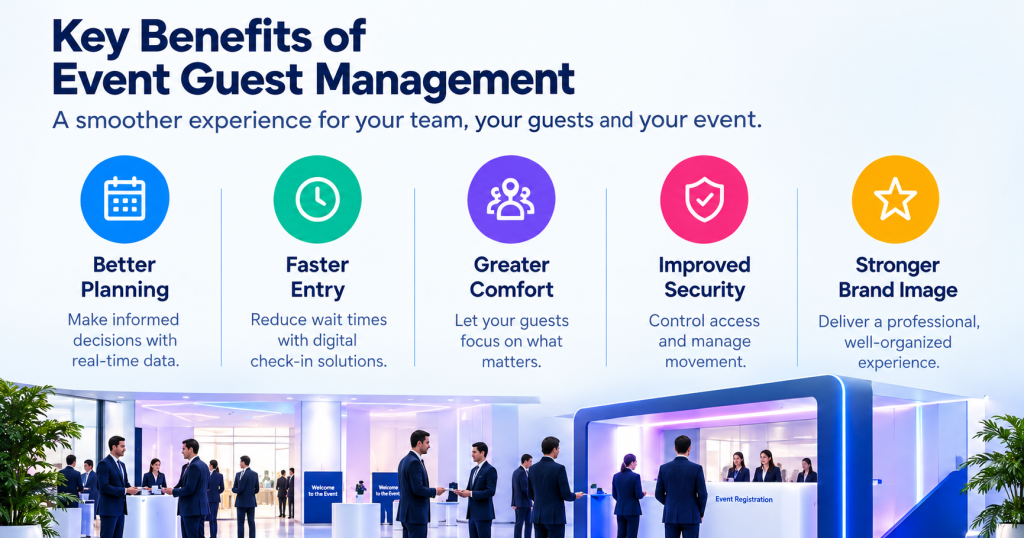
Key Benefits of Event Guest Management
The major benefits of using professional event management solutions are given below:
1. Better Planning Becomes Easier
With proper event guest list management, you start seeing a clearer picture of the event. Not just numbers, but the type of guests as well. Some may need special seating, some may arrive early, and some may not show up at all. When this information is in place, planning feels less stressful. You are not guessing at the last moment. Decisions around food, space, and staff become steadier, even if a few changes still happen along the way.
2. Entry Feels Quicker
Using guest event check-in solutions keeps the entry flow steady. Guests arrive, show their code or name, and move in without much delay. It may sound small, but long lines at the start can affect the mood quickly. When entry is smooth, people settle in faster. Staff also feel less pressure because they are not trying to rush things all at once.
3. Visitors Experience Greater Comfort
When everything proceeds well, visitors begin to unwind without even realizing it. They are not repeatedly stopping to get instructions. They are not scanning their surroundings to choose their next course of action. It just seems obvious. Here, easy access, unambiguous signage, and smooth mobility around the space are quite beneficial. Little things like a staff person mentoring children at the appropriate time may make a big impact. While they are there, guests notice it, even if they don’t discuss it afterwards. They also tend to appreciate the event better if they are at ease.
4. Mobility Remains Under Control
The area seems more structured without being constrained by event access control in place. The system already determines which locations are restricted and which are open.
Employees don’t have to repeatedly stop individuals, which prevents needless back and forth. Additionally, since they already know where they are permitted to go, guests move more easily. It prevents confusion in one area and crowding in another. The flow remains more consistent even during peak hours.
5. Better VIP Management
When VIP guest management goes awry, it’s one of those things that people notice right away. When done correctly, it seems straightforward from the outside. Important visitors arrive promptly, are seated clearly, and get clear instructions. There can be minor alterations or last-minute changes made behind the scenes. However, the team manages it discreetly if the system is in place. No hurry, no obvious tension. It just proceeds as if that was the original idea.
6. Data Gains Utility
During the event, a visitor management system gathers a lot of information. entry times, the actual number of attendees, and the variations in flow throughout the day. If you depend just on recollection, it’s easy to overlook these things. You may not immediately sit down and review this data. However, it helps you understand what worked and what didn’t when you look back later. It provides a better understanding of the next event. Though not flawless, it’s still preferable to speculating.
7. There Are Fewer Errors
Small mistakes are often made while working by hand. A name not on the list, an incorrect detail, or perplexity at the entrance point. Even while these items may not seem like much, they build up during a crowded event.
These opportunities are decreased by an organized system. The team does not have to repeatedly double-check everything since information is kept up to date. In addition to saving time, it prevents those brief moments when visitors sense something is off.
Best Practices for Event Guest Management
Here are the best practices that you need to follow for successful event guest management.
1. Start with a clean list
Keep your event guest list management updated. Remove duplicates. Check details. Even small errors can create confusion later.
2. Use one system
Avoid using too many tools. A single visitor management solution keeps everything in one place and avoids mix-ups.
3. Plan entry in advance
Set up your guest event check-in solutions early. Test them. Make sure the team knows how to use them.
4. Group your guests
Not everyone needs the same access. Segment them properly. It helps with smoother event access management.
5. Handle VIPs separately
Keep their details ready. Plan their entry. It does not need to be complex, just prepared.
6. Be ready for peak time
Guests often arrive at the same time. Add more staff or counters if needed.
7. Train your team
Even a good system needs people who understand it. A calm team handles pressure better.
8. Keep communication simple
Send clear instructions before the event. Time, entry point, what to carry. It avoids confusion later.
9. Watch things in real time
During the event, keep checking the flow. Small changes at the right moment help a lot.
10. Review after the event
Go back to your data. See what worked and what did not. It helps improve the next event.
Common Challenges in Event Guest Management
Despite planning, unforeseen circumstances arise.
- Last-minute changes are made to guest lists. Some visitors show up there without a reservation. Some bring more people. It occurs more often than anticipated.
- There may also be technical problems. Networks malfunction, and devices slow down. Having a backup plan on hand is usually preferable.
- If too many people show up at once, crowd management may become challenging. Movement becomes disorganized in the absence of appropriate event access control.
- Managing VIP visitors is equally stressful. Small errors are more noticeable, and expectations are greater.
How Technology Helps with Guest Management at Events
Technology is helpful, but it cannot take the place of humans. People who are aware of what is going on on the ground are still necessary. Yes, tools speed things up, but someone still has to lead, make decisions, and intervene when something doesn’t seem right.
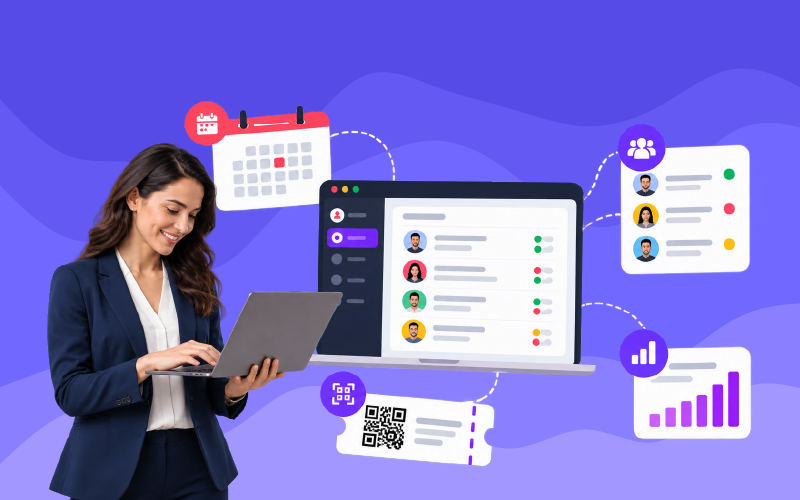
All visitor information is centralized and updated in real time via a visitor management system. When a detail changes, it appears very immediately. This indicates that everyone on the team is seeing the same data rather than several iterations of the same list. It prevents those little instances when someone says “yes,” and someone else says “no,” simply because the data wasn’t updated.
Next are the solutions for guest event check-in. These often function using digital passes or QR codes. Visitors come, look around, and proceed. It reduces waiting times, particularly as the throng grows. Overall, it keeps the line going more efficiently than human inspections, albeit sometimes there is a delay or a scan fails at first.
Movement inside the venue is managed by event access management systems. Which areas are limited, which are open, and who may enter where? The system already has that control, so employees don’t have to repeatedly stop individuals. Guests don’t feel constantly questioned, and things go more smoothly.
With the proper infrastructure, even managing VIP guests becomes simpler. Employees don’t need to go through lists to rapidly verify information, preferences, or access levels. In addition to saving time, it also prevents unpleasant situations when someone important is kept waiting.

Small Things That Matter More Than Expected
Sometimes, it is the small details that shape the experience.
A clear sign at the entry.
A staff member is guiding politely.
A quick answer to a simple question.
These things do not look big, but they stay in memory.
A system alone is not enough. And a friendly team alone is not enough either. Both need to work together.
Final Thoughts
Event guest management is not a one-time task. It starts early and keeps running till the end, and even after that through the data you collect.
When it is done well, it almost feels invisible. Guests move easily, staff stay calm, and the event flows without much effort.
When it is ignored, even a well-planned event can feel scattered.
Keep it simple. Plan clearly. Use the right event tech solutions. And do not forget the friendly on-ground staff. That balance makes all the difference.