

Mobile event apps are transforming how conferences and events are managed across Dubai. From digital registration and contactless check-in to AI-powered networking and real-time attendee engagement, event apps help organizers improve efficiency, boost participation, and measure event success. As Dubai continues to host large-scale international conferences, mobile event apps are becoming essential tools for delivering personalized, data-driven, and seamless event experiences.
Mobile event apps are rapidly becoming a standard part of conferences and events in Dubai. According to DataReportal, mobile phones account for over 58% of global web traffic, making mobile-first event experiences increasingly important. These apps will also help organizers to streamline registration, improve attendee engagement, facilitate networking, simplify event communication, and collect valuable event data.
As Dubai continues to position itself as a global hub for business events, exhibitions, and conferences, mobile event apps are playing a critical role in delivering seamless and personalized event experiences. How? Let us discuss this in more detail.
Key Takeaways
- Mobile event apps streamline registration and attendee management.
- Real-time communication improves attendee engagement.
- AI-powered networking helps attendees make valuable connections.
- Event apps provide measurable insights for organizers and sponsors.
- Hybrid and multi-format events rely heavily on mobile event technology.
- Dubai’s focus on innovation is accelerating event app adoption.
Why Mobile Event Apps Have Become Essential for Modern Conferences
The conference industry has changed significantly over the last decade. Attendees no longer expect events to be limited to physical venues, printed agendas, and manual registration processes. Instead, they expect digital-first experiences that provide convenience, personalization, and real-time access to information.
This shift has made mobile event apps one of the most valuable technologies in the event industry. Research from AMW Group found that 92% of event planners believe event apps improve attendee engagement and communication.
Whether it is a corporate summit, industry conference, government event, trade show, or exhibition, mobile event apps help connect attendees, organizers, sponsors, and exhibitors through a single digital platform.
The Evolution of Conference Technology
Traditional conferences relied heavily on:
- Printed schedules
- Manual check-ins
- Physical directories
- Email-based communication
- Paper surveys
According to AMW Group, 78% of event organizers use event management software for registration, ticketing, and attendee management.
While these methods worked, they often created operational challenges and limited attendee engagement.
Modern event apps replace many of these manual processes with digital solutions that are faster, more interactive, and easier to manage.
Also Read: Types of Mobile Event Apps That Are Transforming Modern Events
Why Attendee Expectations Have Changed
Did you know that Google reports that 53% of users abandon mobile websites that take longer than three seconds to load? Today’s attendees use mobile apps for nearly every aspect of their daily lives, from banking and shopping to travel and entertainment.
As a result, they expect the same level of convenience when attending conferences and events. Here are some common attendee expectations that you should know:
- Instant event information
- Mobile registration
- Personalized schedules
- Real-time updates
- Networking opportunities
- Interactive experiences
Mobile event apps help meet these expectations while improving the overall event experience.
Understanding Mobile Event Apps
However, HubSpot research shows email marketing generates an average ROI of $36 for every $1 spent. Still, you need an efficient app to comprehend.
So, before exploring their impact, it is important to understand what mobile event apps actually do. This is going to help you know whether you need a mobile event app for your event or not.
What Is a Mobile Event App?
A mobile event app is a digital platform designed specifically to support conferences, exhibitions, trade shows, and other events.
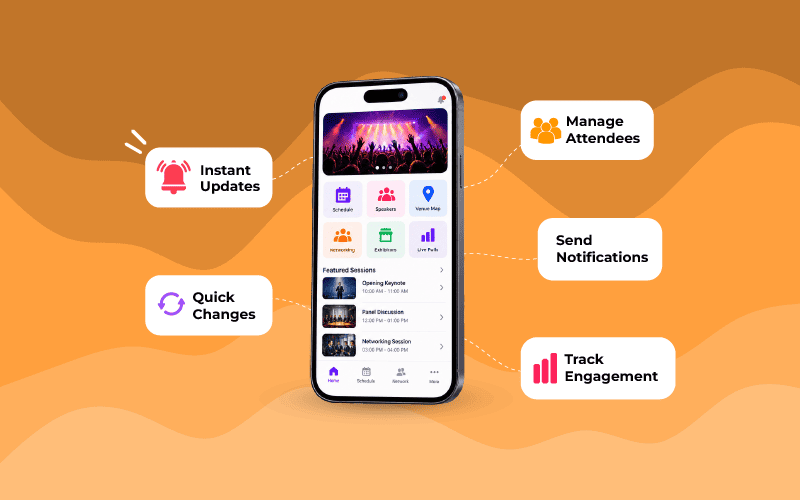
It serves as a centralized hub where attendees can access event information, connect with other participants, view schedules, receive notifications, participate in sessions, and engage with sponsors.
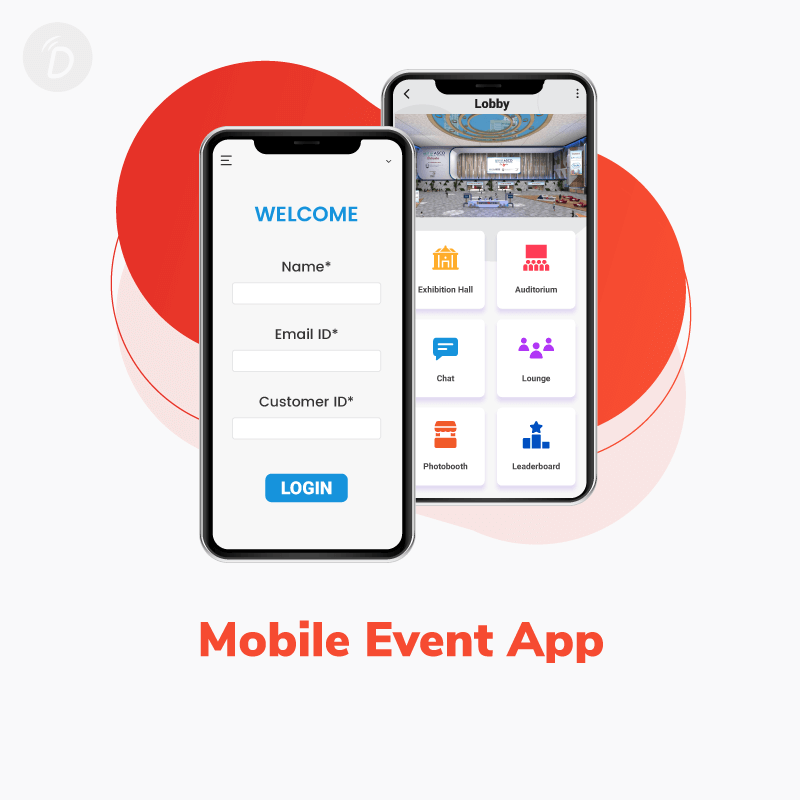
How Mobile Event Apps Work
If you are an event organizer, then you need to typically configure the app before the event by adding:
- Event agendas
- Speaker profiles
- Session details
- Exhibitor information
- Attendee directories
- Venue maps
- Engagement tools
Attendees then download the app and use it throughout the event to navigate and participate in the experience.
Major Components of a Conference Event App
Most modern event apps are capable of offering:
- Registration and ticketing
- Personalized agendas
- Push notifications
- Networking tools
- Live polls
- Surveys
- Session feedback
- Exhibitor directories
- Analytics dashboards
These features help create a more connected and engaging event environment.
Why Dubai Conferences Are Rapidly Adopting Mobile Event Apps
Dubai has established itself as one of the world’s leading destinations for conferences, exhibitions, and business events. From international trade shows and technology expos to government summits and corporate conferences, the city hosts thousands of events every year.
As event scale and attendee expectations continue to increase, organizers are turning to mobile event apps to improve event delivery.
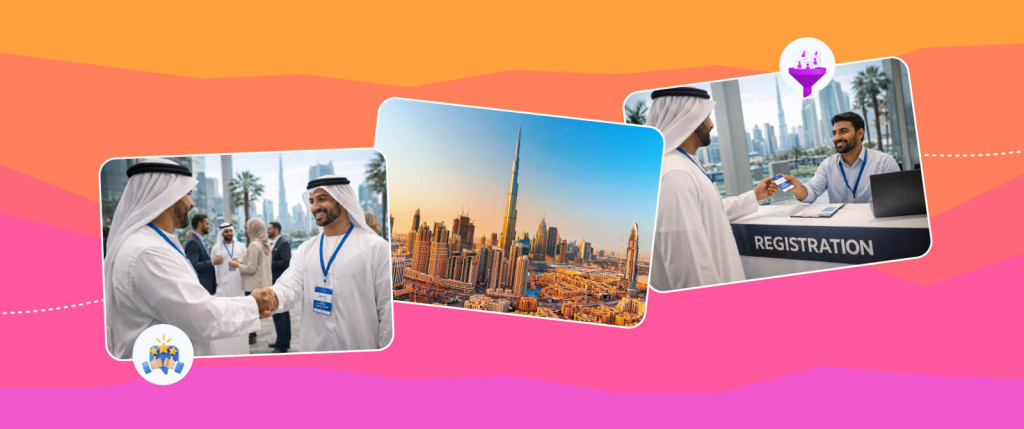
Dubai’s Position as a Global Events Hub
Dubai’s strategic location allows it to attract attendees from:
- Europe
- Asia
- Africa
- The Middle East
This global audience creates unique event management challenges, including communication, navigation, networking, and attendee engagement.
Mobile event apps help organizers address these challenges efficiently.
Growing Demand for Seamless Event Experiences
Conference attendees expect events to be:
- Easy to navigate
- Highly personalized
- Digitally connected
- Efficiently managed
Event apps provide a single platform that supports all these requirements.
The Rise of Smart Event Technology
Dubai has consistently embraced innovation across sectors. This focus on digital transformation has encouraged event organizers to adopt technologies that improve operational efficiency and attendee satisfaction.
Mobile event apps fit naturally into this broader shift toward smarter event experiences.

How Mobile Event Apps Are Transforming Conferences?
Now that we have covered how important a mobile event app can be for your event, you must also understand how they can help you. So, let us get with that.
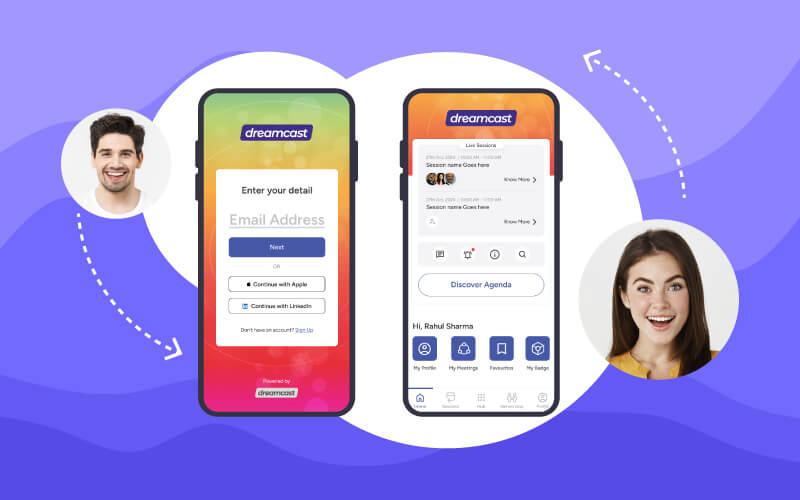
1) Simplifying Event Registration and Check-In
Registration is often the first interaction attendees have with an event. A complicated registration process can create frustration before the event even begins. Mobile event apps simplify registration by allowing attendees to:
- Register online
- Purchase tickets
- Access digital passes
- Receive confirmations instantly
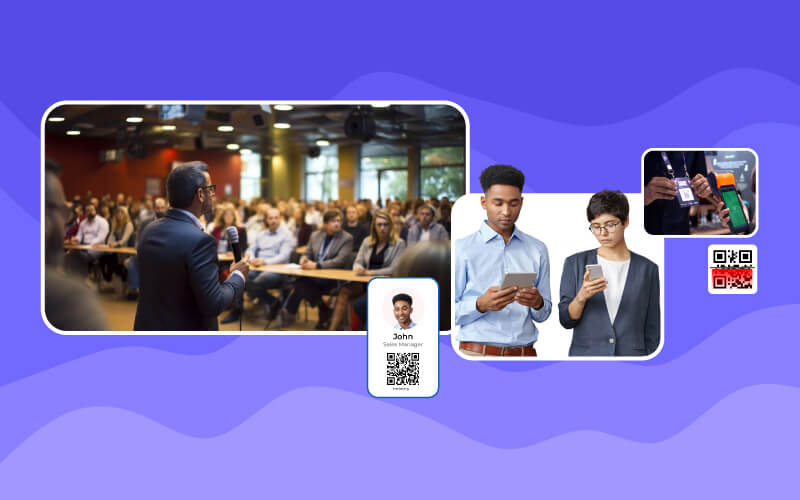
Contactless Check-In Experiences
Many event apps support QR code check-in, digital badges, and contactless entry. This reduces queues and improves event-day efficiency.
Faster Attendee Onboarding
Attendees can access all event information directly from their phones without relying on printed materials or manual assistance.
2) Enhancing Attendee Engagement
One of the biggest advantages of mobile event apps is their ability to increase attendee participation.
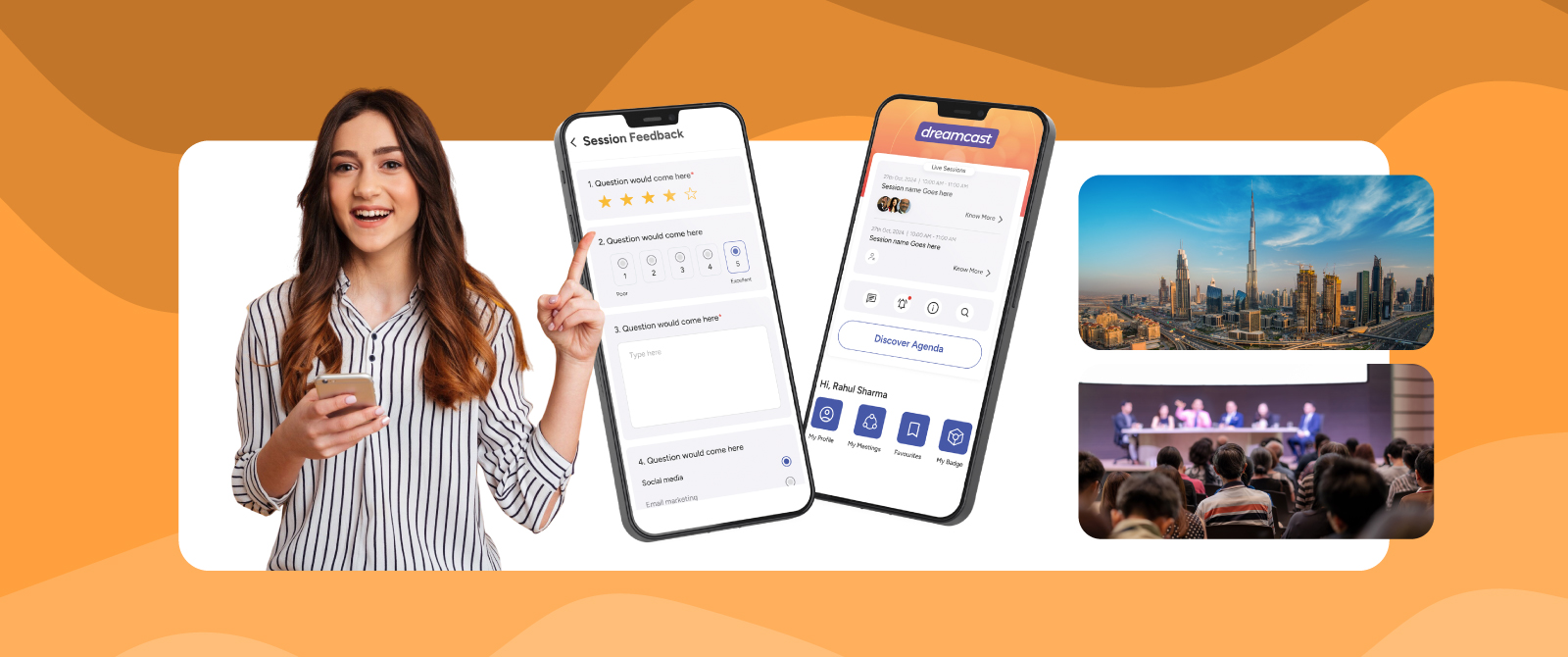
Live Polling and Surveys
Event organizers can collect real-time feedback during sessions through interactive polls and surveys. This helps in-
- Increasing participation
- Improving session quality
- Gathering attendee insights
Interactive Q&A Sessions
Attendees can submit questions directly through the app rather than waiting for microphones during live sessions. This encourages greater audience involvement.
Gamification Features
Many event apps include gamification elements such as:
- Leaderboards
- Challenges
- Points systems
- Rewards
These features encourage exploration, networking, and participation throughout the event.
3) Improving Networking Opportunities
Networking remains one of the primary reasons people attend conferences.
However, traditional networking often depends on chance encounters. Mobile event apps make networking more structured and efficient.
AI-Powered Matchmaking
Modern event apps can recommend connections based on:
- Industry
- Interests
- Job roles
- Business objectives
This helps attendees connect with relevant people more quickly.
In-App Messaging
Attendees can communicate directly through the app without exchanging personal contact information.
Meeting Scheduling
Many event apps allow users to:
- Schedule meetings
- Reserve networking slots
- Coordinate discussions
This increases the likelihood of meaningful business interactions.
4) Delivering Personalized Event Experiences
Attendees increasingly expect events to cater to their specific interests and goals. Mobile event apps make personalization possible at scale. Research cited by EventMB found that 80% of attendees are more likely to engage with personalized event experiences.
Customized Agendas
Instead of manually searching through dozens of sessions, attendees can create personalized schedules directly within the app. This helps them:
- Plan their day efficiently
- Avoid session conflicts
- Focus on relevant content
Personalized Session Recommendations
Many event apps use attendee preferences and behavior to suggest:
- Relevant sessions
- Networking opportunities
- Sponsor interactions
- Workshops and breakout sessions
Real-Time Event Updates
Schedules can change unexpectedly during large conferences. Mobile apps ensure attendees receive instant notifications regarding:
- Session changes
- Venue updates
- Speaker announcements
- Networking opportunities
This reduces confusion and improves the attendee experience.
5) Supporting Hybrid and Multi-Format Events
The conference industry has evolved beyond purely in-person experiences. Many events now combine physical and virtual participation.
Enabling Virtual Attendance
Mobile event apps help remote attendees access:
- Live-streamed sessions
- Virtual networking opportunities
- Interactive Q&A
- Event content libraries
On-Demand Content Access
Attendees often cannot attend every session. Mobile apps allow users to access recorded sessions after the event, extending the value of conference content.
Creating a Unified Event Experience
Hybrid events can create gaps between in-person and virtual audiences. Event apps help bridge these gaps by creating shared spaces for communication, networking, and engagement.
Read more about: Mobile Event App Development: A Step-by-Step Guide for Organizers.
Benefits of Mobile Event Apps
When you know how mobile event apps can help you become better in terms of operations. So, here are some great benefits of event apps from different perspectives.
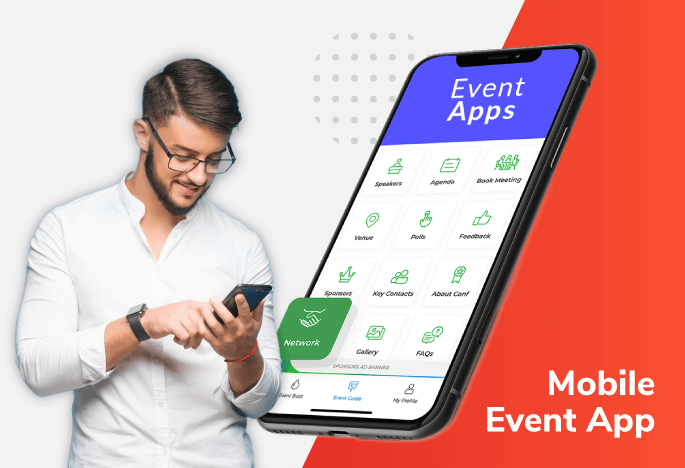
For Event Organizers
a) Better Attendee Management
Organizers gain centralized access to attendee information, registrations, engagement data, and communication tools. This simplifies event operations.
b) Real-Time Event Monitoring
Event apps provide insights into:
- Session attendance
- Networking activity
- Engagement levels
- Popular event areas
These insights help organizers make informed decisions during the event.
c) Increased Operational Efficiency
By digitizing multiple event processes, organizers can reduce:
- Manual administration
- Printing costs
- Check-in delays
- Communication challenges
d) Data-Driven Decision Making
WorldMetrics reports that 73% of event organizers use analytics to improve attendee engagement and future event planning. Mobile apps generate valuable event analytics that help organizers improve future events.
For Attendees
a) Easier Event Navigation
Interactive venue maps help attendees find:
- Session rooms
- Exhibitor booths
- Networking areas
- Registration counters
b) Improved Networking
Attendees can connect with relevant individuals without relying solely on chance encounters.
c) Access to Personalized Content
Event apps allow attendees to discover sessions and resources that align with their interests.
d) Instant Communication
Push notifications ensure attendees never miss important updates.
e) Better Overall Experience
When information is accessible and interactions are simplified, attendees are more likely to have a positive event experience.
For Sponsors and Exhibitors
Sponsors and exhibitors also benefit significantly from event app technology.
a) Enhanced Brand Visibility
Sponsors can showcase their brands through:
- Sponsored banners
- Featured listings
- Push notifications
- In-app advertisements
b) Improved Lead Generation
Event apps help exhibitors collect qualified leads through:
- QR code scanning
- Digital business card exchange
- Meeting scheduling
- Attendee interactions
c) Better ROI Measurement
Sponsors can track:
- Profile views
- Click-through rates
- Session participation
- Lead engagement
This provides measurable insights into sponsorship performance.
Must-Have Features in a Modern Conference Mobile App
Not all event apps offer the same capabilities. When evaluating mobile event apps, organizers should look for the following features:
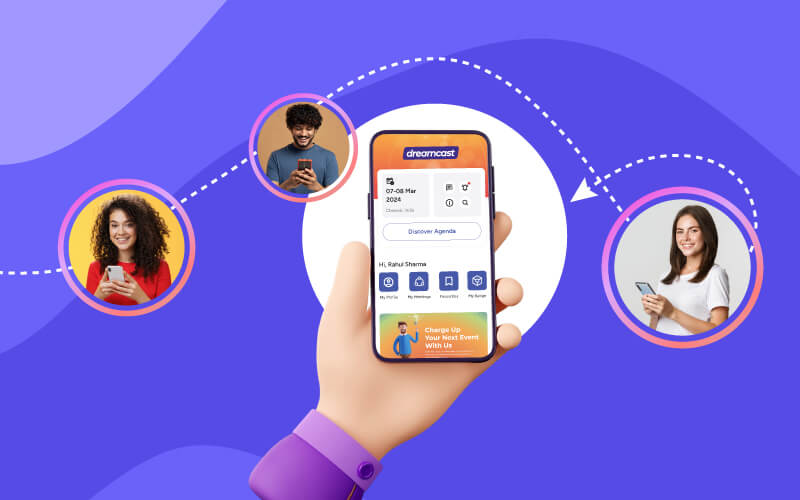
- Event Registration and Ticketing: Online registration, Ticket management, and Digital passes.
- Interactive Event Agenda: Personalized schedules, Session reminders, and agenda updates.
- Networking and Matchmaking: Attendee profiles, AI-powered recommendations, and Meeting scheduling.
- Engagement Tools: Live polls, Surveys, Q&A sessions, and Gamification
- Sponsor and Exhibitor Directories: Company profiles, Product information, and Lead capture tools
- Analytics and Reporting: Engagement tracking, Attendance reports, and Event performance metrics
- Multi-Language Support: Particularly important for international conferences in Dubai that attract attendees from diverse regions.
Also Read: How A Mobile Event App in Dubai Can Power Up MICE Events
How Mobile Event Apps Improve Conference ROI
One of the strongest arguments for event app adoption is its ability to improve event returns.
Increasing Attendee Participation
Interactive experiences encourage attendees to engage with:
- Sessions
- Speakers
- Sponsors
- Networking opportunities
Driving Sponsor Value
Greater visibility and measurable engagement improve sponsor satisfaction.
Reducing Operational Costs
Digital agendas, event guides, and communications reduce printing and administrative expenses.
Improving Event Insights
Did you know that IBM estimates poor data quality costs organizations approximately $12.9 million annually, highlighting the importance of accurate attendee data collection?
Data collected through event apps helps organizers optimize future events and improve long-term event performance.
Real-World Use Cases of Mobile Event Apps
Here are some real-world examples that you must know as an organizer.
Business Conferences: Conference organizers use event apps to manage agendas, networking, and attendee communications.
- Trade Shows and Exhibitions: Exhibitors use event apps to generate leads and schedule meetings.
- Government Events: Government conferences often rely on event apps to efficiently manage large attendee volumes.
- Corporate Summits: Companies use event apps to improve employee engagement and communication during internal events.
- Industry Association Events: Associations use mobile event apps to foster member networking and knowledge sharing.
“The event app is no longer a nice-to-have feature. It has become the digital command center for attendee engagement, communication, networking, and event intelligence.”
— Julius Solaris
Future Trends Shaping Mobile Event Apps
AI-Powered Personalization
Artificial intelligence is helping event apps deliver more relevant recommendations and experiences.
Smart Networking Recommendations
Future apps will increasingly connect attendees based on business objectives, interests, and behavioral data.
Predictive Engagement Analytics
Event organizers will be able to anticipate attendee behavior and proactively optimize the event experience.
Contactless Event Experiences
QR codes, digital badges, and mobile access will continue to reduce physical touchpoints.
Integration With Wearable Technology
Wearables and event apps are expected to work together to provide deeper attendee insights and engagement opportunities.
Mobile Event App Implementation Checklist
Before the Event:
- Define event objectives
- Select the right event app platform
- Upload event content and agendas
- Configure networking features
- Test attendee journeys
During the Event:
- Monitor engagement metrics
- Send real-time updates
- Track attendance and participation
- Encourage networking activities
After the Event:
- Analyze event data
- Review attendee feedback
- Measure sponsor ROI
- Identify improvements for future events
Final Thoughts
Mobile event apps have evolved from being optional event tools to becoming a critical part of modern conference experiences.
As Dubai continues to strengthen its position as a global destination for conferences, exhibitions, and business events, organizers are increasingly relying on mobile event apps to improve attendee engagement, streamline operations, and deliver measurable event outcomes.
The most successful events are no longer defined solely by the quality of their speakers or venues. They are defined by the experiences they create for attendees.
Mobile event apps help deliver those experiences by making events more connected, personalized, efficient, and data-driven.
Organizers who invest in event app technology today will be better positioned to meet attendee expectations and drive event success in the years ahead. With the right event tech partner, you can even meet them faster, easier, and more smoothly.
Read about: Dreamcast Powers India’s Largest Startup Confluence: Startup Mahakumbh 2025
FAQs
A mobile event app is a digital platform that helps attendees access event information, schedules, networking opportunities, engagement tools, and event updates from their smartphones.
Conference organizers use mobile event apps to improve attendee engagement, simplify event management, facilitate networking, and provide real-time communication.
You should ideally launch your event app several weeks before the event to allow attendees to explore agendas, connect with participants, and prepare their schedules.
Attendees can use event apps throughout the event lifecycle, including before, during, and after the conference.
Event organizers, attendees, sponsors, exhibitors, speakers, and event partners all benefit from the enhanced communication and engagement capabilities offered by event apps.
They improve engagement through live polls, surveys, gamification, networking tools, personalized content, and interactive event experiences.