

TL;DR
A secure cashless payment system for events needs more than encryption. Organizers should look for multiple layers of protection, including tokenization, authentication, transaction monitoring, lost-credential blocking, offline transaction controls, secure refunds, data protection, and audit trails.
The system should also give organizers control over user permissions, transaction limits, and suspicious activity. Security becomes especially important during real event conditions such as network outages, lost wristbands, failed payments, refunds, and high transaction volumes.
The right cashless event payment system should protect attendee wallets, payment credentials, transactions, and financial records while maintaining a smooth payment experience.
So, what security features should organizers look for? Let’s find out.
Why Does Choosing the Right NFC Contactless Payment System Matter?
At a small event, a payment delay may mean an extra few seconds at a counter. At a large festival, conference, exhibition, or sporting event, the same delay multiplied across thousands of transactions can create long queues and frustrated attendees.
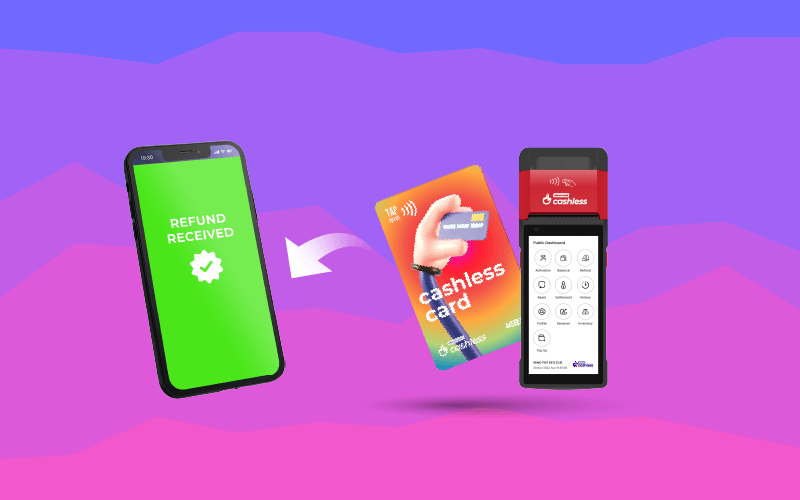
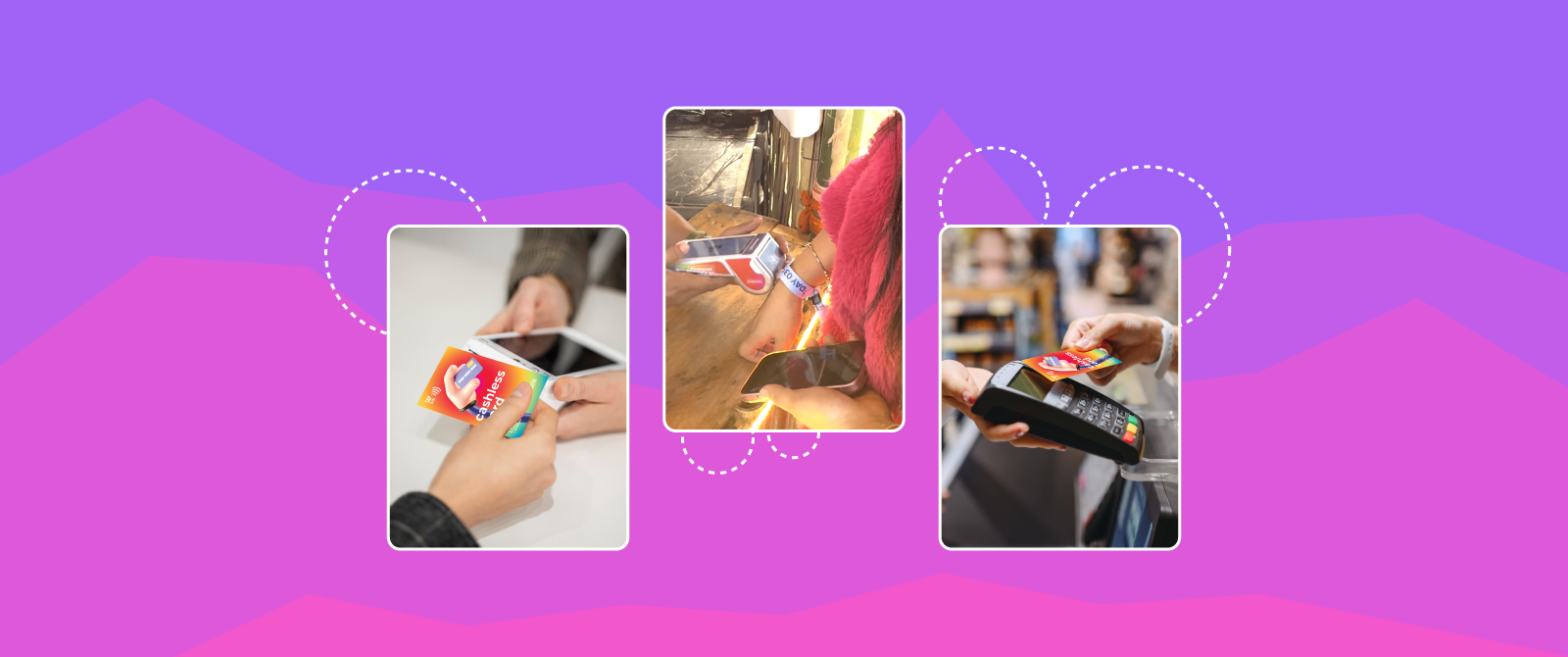
A well-designed cashless payment system can help attendees make quick contactless payments while organizers monitor transactions and sales in real time. Dreamcast’s current cashless solution, for example, supports RFID and NFC cards or wristbands, top-ups, tap-to-pay transactions, and real-time transaction reporting.
The challenge is that not every payment provider will offer the same technology, support, integrations, or operational capabilities.
That’s why your evaluation should cover the entire payment journey, not just the tap at the POS.
So, here are 28 questions to ask before choosing an NFC payment system for your event:
Technology and Integration Questions
1. Can the system integrate with our registration, ticketing, CRM, or event platform?
Your payment system shouldn’t operate as an isolated tool if your event already uses registration, ticketing, CRM, access control, or other event technology.
Ask the provider what integrations are available and whether data can move between systems through APIs or other supported methods.
What to look for:
- Registration and ticketing integration
- CRM connectivity
- API availability
- Access-control integration
- Data synchronization
- Export options
The easier your systems can communicate, the less manual work your event team has to manage.
2. Does the platform support NFC cards, wristbands, or both?
Different events have different requirements.
A conference may prefer NFC cards or badges, while a festival may find wristbands more convenient. Ask whether attendees can use different NFC credentials and whether those credentials can also support access control or other event functions.
Dreamcast’s cashless solution currently supports RFID/NFC-enabled cards and wristbands.
Related Read: How Organizers Can Leverage NFC for Event Registration?
3. Can the payment system be customized for our event?
Your payment setup may need to reflect your event’s size, layout, vendors, zones, payment rules, branding, and attendee journey.
Ask whether the provider can customize:
- Wallet structure
- Payment limits
- User permissions
- POS configuration
- Event zones
- Reports
- Branding
- Refund rules
4. Can the platform scale with our attendee and transaction volume?
Do not evaluate performance only based on your expected attendee count.
Ask about your peak transaction volume.
A provider should be able to explain how many POS devices, users, transactions, and vendors the system can support and how it behaves during busy periods.
Attendee Experience Questions
5. How fast is an NFC payment transaction?
Speed directly affects queues.
Instead of accepting a generic claim such as “transactions are instant,” ask the provider to demonstrate the complete payment flow and explain how it performs during peak periods.
Ask:
“What transaction speed can you consistently support under peak event conditions?”
6. Can attendees use the system without downloading an app?
Not every attendee will want to install an app just to make a purchase.
Ask whether attendees can use an NFC card or wristband directly and what options are available for checking balances, topping up, and requesting refunds.
Reducing unnecessary steps can make the payment experience easier for a wider audience.
7. How can attendees top up their wallets?
Understand every available top-up method before selecting a provider.
Depending on the platform, options may include onsite top-up counters, online top-ups, cards, UPI or other local payment methods, and mobile-based top-ups.
Also ask whether attendees can recharge remotely or only at designated counters.
8. Can attendees check their balance and transaction history?
Balance visibility can reduce confusion and support requests.
Ask whether attendees can see:
- Current balance
- Recent transactions
- Top-up history
- Refund status
- Spending information
9. Can the same NFC credential be used across multiple event days?
If you are organizing a multi-day event, you shouldn’t necessarily have to issue a new credential every day.
Ask whether one NFC card or wristband can remain active throughout the event and whether balances carry forward between days.
10. What happens if an attendee loses their NFC wristband or card?
This is one of the most important operational questions.
Ask whether a lost credential can be:
- Deactivated immediately
- Replaced
- Linked to a new credential
- Protected from unauthorized spending
- Associated with the attendee’s remaining balance
Your provider should also explain the exact process staff should follow onsite.
Vendor and Operations Questions
11. Can vendors be onboarded and managed through the platform?
If multiple food, beverage, merchandise, or other vendors are participating, manual payment management can quickly become complicated.
Ask whether the system supports:
- Vendor profiles
- Individual permissions
- POS assignment
- Product/menu configuration
- Vendor reporting
- Settlement management
12. Can vendors monitor their sales in real time?
Vendors should have access to the information they need without necessarily seeing data belonging to other vendors.
Ask whether vendors can view their sales, transactions, products sold, revenue, refunds, and settlement information.
13. How are vendor settlements handled?
Do not leave settlements until after the event.
Ask:
- How are transactions attributed to each vendor?
- How are refunds deducted?
- When are vendors paid?
- What reports are provided?
- Can finance teams export settlement data?
A clear settlement process can significantly reduce post-event reconciliation work.
14. Can vendors use handheld devices or POS terminals?
Your event layout may require different hardware setups.
Ask whether vendors can accept payments through dedicated POS terminals, handheld devices, and other supported payment hardware.
Also ask about battery life, replacement devices, charging, and device allocation.
Connectivity and Performance Questions
15. What happens if the venue has weak internet connectivity?
This question is particularly important for outdoor festivals, large venues, temporary event sites, and locations where network coverage may fluctuate.
Do not just ask whether the provider supports “offline mode.”
Ask exactly what happens when connectivity is lost.
16. Does the platform support offline transactions?
A reliable event cashless system should have a clear plan for connectivity interruptions.
Ask:
- Can payments continue offline?
- How are transactions stored?
- When are they synchronized?
- How are duplicate transactions prevented?
- What happens if the device remains offline for an extended period?
Dreamcast currently highlights offline payment capability as a feature of its event cashless solution.
17. How does the system handle peak transaction periods?
Your busiest 30 minutes may matter more than your average event traffic.
You should ask the provider to explain maximum transaction capacity, POS scalability, peak-load handling, server/infrastructure architecture, failure recovery, and performance monitoring.
If possible, request evidence from events with similar attendance and transaction volumes.
18. What happens if a POS device fails?
Technology can fail even when the overall system is working.
Ask whether the provider has:
- Spare POS devices
- Replacement hardware
- Backup power
- Device monitoring
- Onsite technical staff
- A defined incident-response process
You want to know what happens five minutes after something goes wrong, not just what happens when everything works.
Security and Payment Protection Questions
19. How is attendee payment and personal data protected?
Ask what information the platform collects, where it is stored, who can access it, and how it is protected.
Your provider should be able to explain its security practices clearly rather than simply saying the system is “secure.”
Related Read: A Dive into Security Protocols in Modern Cashless Payment System
20. Does the platform use encryption and tokenization?
Ask the provider to explain the security technologies used to protect payment information and sensitive data.
You should also understand which payment components are handled by the platform and which are handled by external payment partners.
21. Can lost or stolen credentials be blocked immediately?
A lost NFC wristband shouldn’t automatically mean unrestricted access to the associated wallet.
Ask how quickly a credential can be disabled and whether the attendee’s remaining balance can be transferred to a replacement credential.
22. What fraud-prevention and transaction-monitoring features are included?
Ask whether your team can identify unusual activity, duplicate transactions, suspicious refunds, or other anomalies.
Also ask whether administrators can set user permissions and transaction controls.
23. Which security standards and compliance requirements does the provider follow?
Don’t rely on a generic “secure platform” statement.
Ask the provider for relevant documentation about its security practices, payment processing arrangements, data protection, and applicable compliance requirements.
Reporting, Analytics, and Management Questions
24. Will our event team have an admin dashboard?
A good payment system should give organizers visibility without requiring them to manually combine spreadsheets from multiple vendors.
You should ask whether the dashboard provides information on:
- Transactions
- Revenue
- Wallet balances
- Vendor performance
- Refunds
- Top-ups
- Product sales
- Peak transaction periods
Dreamcast’s cashless platform highlights real-time transaction data and reporting for monitoring sales and settlement.
25. What real-time analytics are available?
Real-time data becomes particularly valuable when you can act on it during the event.
For example, if one food counter is experiencing unusually high demand, you may be able to redirect staff or inventory before the queue becomes unmanageable.
Ask whether the platform can help you identify:
- Best-selling products
- High-performing vendors
- Peak sales periods
- Spending patterns
- Transaction volumes
- Refund activity
- Implementation, Cost, and Support Questions
26. What does implementation involve?
You should ask for the complete implementation timeline.
It should cover system configuration, credential setup, POS deployment, vendor onboarding, integrations, testing, staff training, attendee communication, and event-day support.
The earlier these details are defined, the fewer surprises you’ll face closer to event day.
27. What support and training will our team receive?
Your staff does not need to become payment-technology experts.
But they should know how to:
- Issue or replace credentials
- Handle failed transactions
- Help with top-ups
- Block lost credentials
- Handle refunds
- Troubleshoot basic POS issues
- Escalate technical problems
Ask whether the provider offers training before the event and technical support onsite.
28. What hardware is required, and what does it cost?
Finally, understand the complete hardware requirement.
Depending on your setup, this may include:
- NFC cards or wristbands
- POS devices
- NFC readers
- Top-up terminals
- Charging equipment
- Backup devices
- Network equipment
Also ask whether hardware is rented or purchased, what happens if equipment is damaged, and whether replacement devices are included.
Why Consider Dreamcast for Event Cashless Payments?
Dreamcast provides an event-focused cashless payment system built around RFID and NFC cards or wristbands. The platform supports attendee top-ups, tap-and-pay transactions, real-time reporting, offline payment capability, inventory management, tax invoice billing, and other operational features.
Dreamcast also reports more than 500 events delivered, $5 million+ in cashless transactions, and 550,000+ cards swiped through its cashless offering.
For organizers evaluating providers, the key isn’t simply whether a platform supports NFC. It’s whether the entire system—from attendee onboarding and top-up to payment, vendor management, reporting, refunds, and event-day support—works together reliably.
Looking for a cashless payment system for your next event? Explore Dreamcast’s event cashless solution.
End Notes
Choosing an NFC contactless payment system isn’t just about accepting digital payments; it’s about ensuring your attendees, vendors, and event team have a smooth experience from start to finish. By asking these questions before signing with a provider, you’ll be better equipped to compare solutions, avoid costly surprises, and invest in a platform that meets both your current and future event needs.