

TL;DR
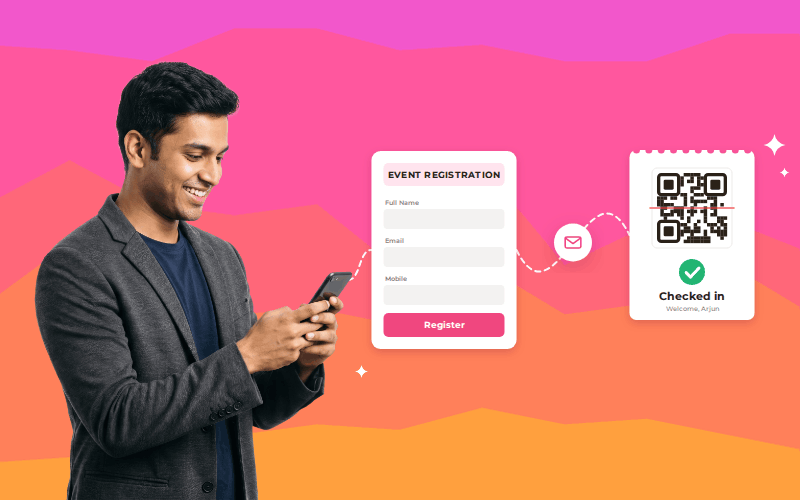
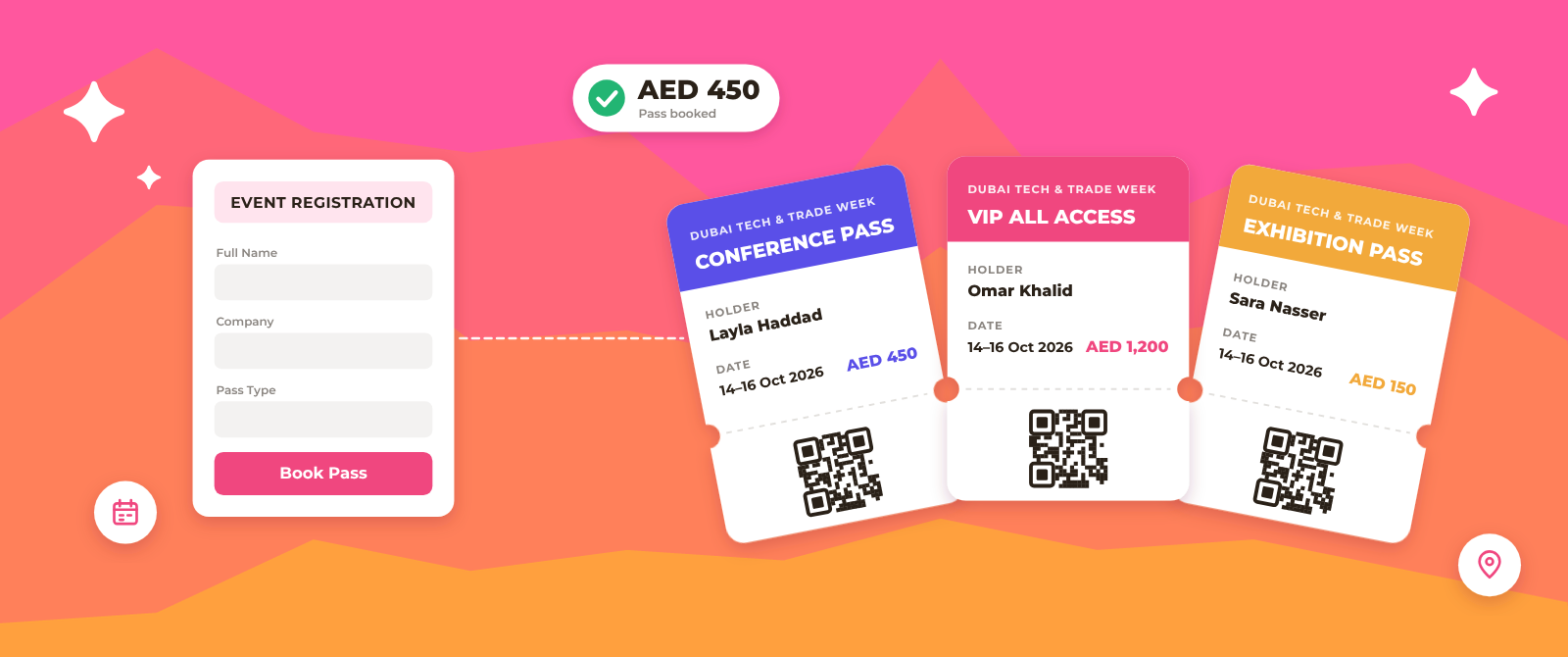
Event registration and ticketing solutions help conference and exhibition organizers manage online registrations, ticket sales, attendee information, payments, QR code check-ins, and on-site entry through a centralized system. They simplify attendee management, reduce manual work, and make event operations more efficient.
Intro
Managing registrations and ticket sales for conferences and exhibitions involves more than collecting attendee details and issuing tickets. Organizers must handle different attendee categories, payment transactions, registration confirmations, entry permissions, and on-site check-ins. These requirements become more complex when thousands of delegates, exhibitors, speakers, and visitors attend the same event.
Manual processes and disconnected tools can create registration errors, payment delays, duplicate records, and long queues at event entrances. Event registration and ticketing solutions address these challenges by connecting online registration, ticket management, and on-site operations within one platform.
Whether organizing a business conference, industry exhibition, trade show, or corporate summit, the right solution helps organizers manage the attendee journey from registration to event entry.
Why Do Conferences and Exhibitions Need Dedicated Registration and Ticketing Solutions?
Conferences and exhibitions need dedicated registration and ticketing solutions to manage large attendee volumes, different ticket categories, payments, and entry requirements without relying on manual processes.
Unlike smaller gatherings, these events often involve multiple attendee groups with different registration requirements. A conference may have speakers, delegates, sponsors, and VIP guests, while an exhibition may need separate registration processes for visitors, exhibitors, buyers, and booth staff.
A dedicated platform helps organizers manage these requirements through:
- Centralized registration management: Collect and manage attendee information from one dashboard instead of maintaining multiple spreadsheets.
- Simplified ticket sales: Create different ticket categories, set prices, and manage registration limits.
- Reduced manual errors: Automate registration confirmations, payment updates, and ticket generation.
- Faster venue entry: Use QR code scanning to verify registrations and reduce queues at check-in counters.
- Better attendee segmentation: Organize attendees by registration type, organization, or access category.
- Real-time event insights: Track registrations, ticket sales, and attendance to make informed operational decisions.
These capabilities are particularly useful for multi-day conferences and large exhibitions where registration activity continues before and during the event.
Read More: How Does an Event Registration Platform Work?
What Features Should Event Registration and Ticketing Solutions Include?

An effective event registration and ticketing solution should support the complete registration process, from collecting attendee details and processing payments to issuing tickets and managing venue entry.
The following features help organizers manage these activities efficiently.
1. Customizable Online Registration Forms
Registration forms are the first point of interaction between an event and its attendees. A good platform should allow organizers to create forms based on their event requirements and attendee categories.
For example, a business conference may collect information such as name, company, designation, email address, and industry. An exhibition may require additional details, including business interests, visitor type, company size, and areas of interest.
Look for registration software that offers:
- Custom fields and form layouts.
- Mandatory and optional questions.
- Conditional fields based on attendee responses.
- Separate forms for different attendee categories.
- Mobile-friendly registration pages.
Customizable forms help organizers collect relevant information without making the registration process unnecessarily complicated.
2. Multiple Ticket Types and Pricing Options
Conferences and exhibitions rarely have one ticket category for everyone. Organizers often need different passes depending on attendee type, event access, and pricing preferences.
For example, a conference may offer early-bird tickets, standard delegate passes, VIP passes, and speaker registrations. An exhibition may provide free visitor passes, paid business passes, exhibitor passes, and multi-day entry tickets.
The event registration and ticketing platform should support:
- Free and paid tickets.
- Early-bird and regular pricing.
- VIP and premium passes.
- Group and bulk registrations.
- Single-day and multi-day tickets.
- Registration limits for individual ticket categories.
Flexible ticket management allows organizers to control availability, adjust pricing, and offer suitable registration options to different audiences.
3. Secure Online Payment Processing
For paid conferences and exhibitions, payment processing is an important part of the registration experience. Attendees should be able to purchase tickets through a secure and convenient payment process. A reliable platform should integrate with payment gateways and support commonly used payment methods, such as credit cards, debit cards, and other available digital payment options.
Organizers should also look for features such as:
- Automated payment confirmation.
- Transaction tracking and payment status updates.
- Refund and cancellation management.
- Tax configuration and transparent pricing.
- Secure handling of payment-related information.
For international events, supporting payment methods commonly used by attendees from different countries can make ticket purchasing more convenient.
4. Automated Registration Confirmation and Ticket Delivery
Once an attendee completes registration, they should receive confirmation without waiting for manual approval or communication from the event team. Automated notifications help keep attendees informed and reduce the workload on registration teams.
A registration and ticketing platform should support:
- Instant registration confirmation.
- Automated email and WhatsApp notifications.
- Digital ticket generation.
- Unique QR codes for registered attendees.
- Payment receipts and booking details.
- Event reminders and important updates.
For example, when someone registers for an exhibition, the platform can automatically send a confirmation message containing their registration details and QR-based entry ticket.
5. QR Code-Based Check-In and Badge Printing
Event registration management does not end when an attendee receives a ticket. Organizers must also verify registrations and manage entry at the venue.
QR code-based check-in allows staff to scan an attendee’s digital ticket and verify their registration against the event database. Once validated, the attendee’s entry status can be updated in the system.
For conferences and exhibitions, useful capabilities include:
- QR code scanning through mobile devices.
- Real-time attendee verification.
- Duplicate entry detection.
- Self-service check-in kiosks.
- On-site badge printing.
- Quick badge reprinting when credentials are lost or damaged.
For large-scale events, automated kiosks can further simplify the process. Attendees can scan their QR codes, verify their registration, and print their badges with minimal assistance.
6. Attendee Category and Access Management
Different attendees often require access to different event areas, sessions, or facilities. A registration and ticketing solution should allow organizers to assign permissions based on attendee categories.
For example, a conference may provide speakers with access to speaker lounges, VIP guests with access to exclusive areas, and delegates with access to general conference sessions.
Similarly, an exhibition may have separate access permissions for exhibitors, visitors, media representatives, and business buyers.
An effective platform should support:
- Category-based attendee identification.
- Role-based access permissions.
- Separate entry zones.
- Session-level access management.
- Real-time credential verification.
When connected with QR-based access control, these features help organizers ensure that attendees enter only the areas permitted by their registration category.
7. Real-Time Registration and Ticket Sales Reporting
Organizers need accurate information to understand how registrations and ticket sales are progressing. Real-time reporting provides visibility into event performance without manually compiling data from different sources. A centralized dashboard should help track:
- Total registrations.
- Ticket sales by category.
- Paid and unpaid registrations.
- Attendee category distribution.
- Daily registration trends.
- Check-in and attendance records.
For example, if VIP registrations are approaching their capacity limit, organizers can monitor availability and make necessary adjustments. Similarly, exhibition organizers can review visitor registrations to understand expected footfall.
These insights support better planning for staffing, entry counters, seating, and other event requirements.
How Do Registration and Ticketing Requirements Differ Between Conferences and Exhibitions?

Although both event formats require registration and ticket management, their operational requirements are different. Conferences generally focus on delegate participation, sessions, and networking, while exhibitions involve visitor registration, exhibitor management, and large-scale venue access.
| Requirement | Conferences | Exhibitions |
| Registration categories | Delegates, speakers, sponsors, VIPs | Visitors, exhibitors, buyers, media |
| Ticket types | Delegate passes, VIP passes, session passes | Visitor passes, exhibitor passes, multi-day passes |
| Access management | Conference halls, sessions, speaker areas | Exhibition halls, booths, restricted zones |
| Attendee engagement | Networking, meetings, workshops | Exhibitor discovery, product demonstrations |
| Check-in requirements | Session and delegate verification | High-volume visitor entry |
| Reporting | Registrations, session attendance | Visitor footfall, exhibitor attendance |
An effective platform should accommodate these differences rather than offering only basic ticket purchasing functionality.
For conferences, session-level registration, speaker management, and delegate categorization may be important. For exhibitions, visitor segmentation, exhibitor registration, badge printing, and high-volume entry management often take priority.
Organizers running events that combine conferences and exhibitions should consider platforms that support both sets of requirements.
How to Choose the Right Conference Registration and Ticketing Software?
The right conference registration and ticketing software should simplify attendee registration, support different ticket categories, and connect online registration with on-site event management.
Before selecting a platform, organizers should evaluate the following factors:
1. Registration flexibility: Check whether the software supports customized forms, multiple registration categories, and different attendee requirements.
2. Ticketing capabilities: Ensure it supports free and paid tickets, early-bird pricing, group bookings, and multi-day passes.
3. Payment integrations: Verify whether the platform supports suitable payment gateways and provides automated transaction tracking.
4. Check-in functionality: Look for QR code scanning, attendee verification, and badge printing capabilities.
5. Scalability: Choose software that can handle expected registration volumes without slowing down during peak registration periods.
6. Data management: Check how attendee information is collected, accessed, stored, and managed. Role-based permissions and appropriate data protection practices are important.
7. Reporting and support: Ensure the platform provides useful registration reports and reliable technical assistance before and during the event.
A solution that connects these capabilities can reduce the need for multiple disconnected tools and make conference operations easier to manage.
What Should Organizers Look for in an Exhibition Registration and Ticketing Platform?
An exhibition registration and ticketing platform should be designed to handle high visitor volumes, multiple exhibitor categories, and fast on-site entry. Exhibitions can attract thousands of visitors within a short period, particularly during peak hours. Therefore, the platform should support both advance visitor registration and walk-in registrations at the venue.
Some important capabilities include:
- Visitor pre-registration: Allow visitors to register online before arriving at the exhibition.
- Exhibitor registration: Provide separate registration workflows for exhibitors, booth staff, and business partners.
- Bulk registration: Enable organizations to register multiple employees or representatives together.
- Visitor categorization: Identify visitors based on business interests, industry, or registration type.
- QR-based entry: Verify visitor credentials quickly at exhibition entrances.
- On-site badge printing: Generate physical badges through registration counters or self-service kiosks.
- Visitor analytics: Track registrations, check-ins, and overall attendance.
For international exhibitions and trade shows, multilingual registration experiences and support for international payment methods can also improve accessibility.
The platform should connect visitor registration with on-site check-in so organizers can manage the entire process without repeatedly transferring attendee information between systems.
Read More: What Key Features Should an Event Registration Platform Offer?

Conclusion
Managing registrations and ticket sales for conferences and exhibitions requires more than a basic ticket booking system. Organizers need a solution that connects online registration, payment processing, attendee categorization, ticket delivery, QR-based check-in, and on-site access management. The right event registration and ticketing solutions can reduce administrative work, improve the attendee experience, and give organizers better visibility into event operations. When evaluating a platform, consider your event format, expected attendance, ticketing requirements, payment needs, and on-site check-in processes. Choosing a solution that supports the complete attendee journey will make it easier to manage both conferences and exhibitions.
FAQs
Event registration and ticketing solutions are software platforms that help organizers manage online registrations, ticket sales, attendee information, payments, digital tickets, and event check-ins through a centralized system.
Conference registration software manages attendee information, registration categories, and participation requirements. Ticketing software primarily handles ticket availability, pricing, purchases, and payments. Many modern platforms such as Dreamcast combine both capabilities.
Yes. Scalable platforms can manage high registration volumes, multiple visitor categories, bulk registrations, QR-based check-ins, and automated badge printing for large exhibitions and trade shows.
An exhibition registration platform should support visitor pre-registration, exhibitor registration, multiple ticket categories, bulk registration, QR code check-in, badge printing, access management, and real-time visitor reporting.