


TL;DR Verdict
Dreamcast Cashless and Intellitix both use RFID-based technology to support cashless event payments, but their strengths are slightly different.
Dreamcast focuses on RFID/NFC payments alongside features such as offline transactions, top-ups, refunds, inventory management, billing, and reporting. Intellitix offers RFID cashless payments alongside POS, access control, ticketing integrations, vendor management, and attendee-level data.
Your choice should depend on whether you primarily need a cashless payment solution integrated with broader event operations or a highly connected RFID ecosystem linking payments, access, ticketing, and event data.
Introduction
Both Dreamcast Cashless and Intellitix use RFID-based event technology and support cashless payments, real-time data, and event operations.
Dreamcast Cashless focuses on RFID/NFC payments alongside operational capabilities such as offline transactions, top-ups, refunds, inventory management, billing, and real-time reporting. Intellitix positions its platform around an integrated combination of cashless POS, RFID access control, ticketing integrations, and event analytics.
Choosing a cashless payment platform for an event is not simply about finding a system that lets attendees tap a wristband to pay.
For organizers, the bigger questions are: How will payments work? Can the system operate if connectivity drops? How will vendors manage transactions? Can payment data connect with access control? What kind of reports will you get? And how much of your event operation can one platform actually support?
The Events Industry Council, in partnership with Oxford Economics, reported that 1.65 billion people participated in business events globally in 2025. Business events also generated US$1.3 trillion in direct spending.
So, which one should you choose?
The answer depends less on which platform has “more features” and more on what you need your cashless system to accomplish at your event.
Dreamcast Cashless vs Intellitix: A Quick Overview
MPI’s Q3 2026 Meetings Outlook found that 73% of event professionals say intentional event design will be “very important” or “essential” for achieving business outcomes over the next two years.
So, before getting into individual features, it helps to understand the overall positioning of both solutions.
| Feature | Dreamcast Cashless | Intellitix |
| RFID payments | ✓ | ✓ |
| NFC/contactless payments | ✓ | ✓ |
| RFID cards/wristbands | ✓ | ✓ |
| Offline payment capability | ✓ | ✓ |
| On-site top-ups | ✓ | ✓ with RFID POS |
| Refunds | ✓ | Supported through its payment ecosystem |
| Real-time transaction reporting | ✓ | ✓ |
| Inventory management | ✓ | Vendor/POS management |
| Tax/GST/VAT billing | ✓ | Payment and settlement capabilities |
| Access control | Available as part of event solutions | ✓ |
| Ticketing integration | ✓ | ✓ |
| Multi-vendor management | ✓ | ✓ |
| Per-guest spending insights | ✓ | ✓ |
| Event technology beyond payments | Broader event-tech ecosystem | Strong focus on connected live-event operations |
The key difference is in the breadth and structure of the ecosystem.
Dreamcast positions Cashless as part of a wider event technology offering, while Intellitix has built a connected platform around RFID access control, cashless POS, payments, ticketing integrations, and real-time event data.
With that distinction in mind, let’s find out about the areas that matter most.
How Do Dreamcast and Intellitix Handle Cashless Payments?
The International Association of Exhibitions and Events reported that B2B exhibition attendance increased 4.7% in 2025. However, real exhibition revenues remained more than 10% below 2019 levels.
At the basic level, both platforms are designed to remove the need for traditional cash transactions at event vendors.
Dreamcast Cashless uses RFID and NFC-enabled cards or wristbands. Attendees can top up their balance and then tap their credential at participating payment points. Dreamcast also supports offline payment operation, which can be particularly useful for venues where reliable internet connectivity cannot be guaranteed.
Intellitix offers more than one payment model. Its ITX POS supports conventional card and mobile payments, while ITX POS+ adds RFID identification and guest-level spending data. Its ITX RFID POS goes further by supporting RFID wristband payments and on-site or online fund top-ups in a closed-loop environment.
This means Intellitix can accommodate events that do not necessarily want to go completely closed-loop, while still giving organizers an RFID-based option when they need deeper attendee-level data.
What This Means for Organizers
If your primary goal is to introduce RFID/NFC cashless payments with straightforward top-up, payment, refund, and operational management, Dreamcast is a strong fit.
If you want multiple payment models, from conventional cards and mobile wallets to RFID-enabled and closed-loop payments, Intellitix offers more distinct POS configurations.
What About Offline Payments?
Connectivity is one of those things organizers often overlook until event day.
The International Congress and Convention Association’s 2025 rankings analyzed data from 12,438 international association meetings worldwide.
A payment system that depends completely on continuous internet connectivity can become a serious operational problem when thousands of attendees are trying to make purchases simultaneously.
Dreamcast specifically promotes an internet-independent cashless system, allowing transactions to continue even when continuous connectivity is unavailable. Transactions can then be managed through the platform for reporting and reconciliation.
Intellitix also provides offline mode across its ITX POS solutions, with transactions capable of syncing automatically.
Which Is Better?
There is no meaningful winner here simply because boths address offline operation. Instead, ask your provider:
- How many transactions can be stored offline?
- How quickly are they synchronized?
- What happens if a device loses connectivity during peak hours?
- How are duplicate or failed transactions handled?
- What is the reconciliation process afterward?
These operational details can matter more than the word “offline” on a feature sheet.
Also read: How to Implement RFID Cashless Payments at Events
How Do Their RFID and Access Control Capabilities Compare?
This is where Intellitix has a particularly strong proposition.
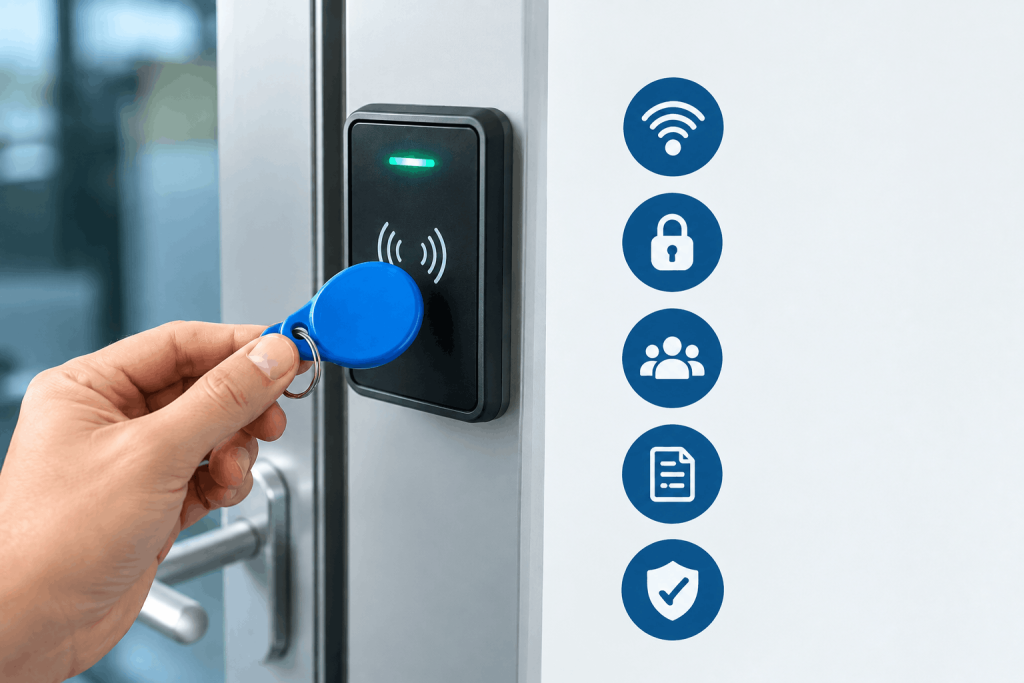
Intellitix was originally built around RFID access control and has expanded that infrastructure into cashless payments and event data. Its access-control solution supports entry validation, multiple gates and lanes, live entry counts, and multi-zone management.
The company says its access-control platform integrates with more than 20 ticketing platforms.
Its broader platform is designed around connecting ticketing → access → payments → attendee activity.
Dreamcast also uses RFID/NFC credentials for cashless payments and offers access-management capabilities as part of its broader event technology ecosystem. Its event solutions can connect registration/ticketing and RFID credentials, while its cashless platform can support payments across event spaces.
EY’s analysis of India’s live-events market found that more than 30,000 live events were conducted in India in 2024, excluding personal events.
The Practical Difference
If your event requires deep RFID-based access control and multi-zone entry management as a central part of the technology stack, Intellitix deserves close consideration.
If you want cashless payments to sit within a broader event technology ecosystem, Dreamcast can be attractive because cashless is not treated as an isolated payment function.
Which Platform Offers Better Analytics and Reporting?
Cashless payments generate much more useful information than simply showing how much money was collected. The real value comes from understanding:
- What attendees purchased
- Where they spent
- When spending peaked
- Which vendors performed best
- How much attendees spent per head
- How payment activity changed throughout the event
Dreamcast provides real-time transaction insights, sales reporting, inventory visibility, and reports delivered through WhatsApp. It also supports real-time inventory updates and itemized billing.
Intellitix takes a particularly integrated approach to event analytics. Its data platform connects entry information with payment and guest activity, allowing organizers to analyze metrics such as spending per head, entry patterns by time and location, and product sales by demographic.
So Which Analytics Approach Is Better?
It depends on what you need the data to do.
Dreamcast is well suited to organizers who want operational payment reporting, including transactions, inventory, billing, and sales visibility.
Intellitix is particularly strong when you want to connect payment behavior with access and guest-level event data.
For a large festival, for example, knowing that a particular zone has high entry traffic and high per-head spending can help you make decisions about staffing, inventory, vendor placement, and future event layouts.
How Do Vendor and Payment Operations Differ?
Large events rarely have just one payment counter.
You may have dozens or hundreds of vendors selling food, beverages, merchandise, experiences, or other products. That makes vendor management an important part of the cashless platform decision.
Dreamcast provides inventory management, POS-based billing, transaction tracking, and real-time reporting. Organizers can monitor sales and inventory while vendors process cashless payments.
Intellitix’s ITX POS supports multi-vendor management, allowing individual vendors to manage their menus and pricing while organizers receive consolidated reporting. Its payment platform also supports vendor-level settlement and revenue breakdowns.
For organizers managing a complex festival, this distinction matters because payment processing and vendor settlement are operational processes, not just technology features.
What About Top-Ups, Refunds and Billing?
Attendee money management is another area you should clarify before choosing a platform.
Dreamcast supports top-ups through its cashless infrastructure and provides a refund process after the event. Its platform also supports GST, VAT, and tax-compliant invoices, depending on the deployment and event requirements.
Intellitix’s closed-loop RFID POS supports on-site and online fund top-ups, including auto-top-up functionality. Its payment offering also emphasizes merchant-of-record capabilities, settlement, and payment processing.
If your event operates in India or the UAE, however, don’t evaluate billing and settlement based only on a feature checklist. Ask specifically about local tax requirements, settlement timelines, refund workflows, payment methods, and who is responsible for handling attendee payment disputes.
Those details can have a much bigger impact on your operations than the payment technology itself.
Read also about: Future of RFID Cashless Payments at Sports Events (2026 & Beyond)
Which Events Are Dreamcast and Intellitix Best Suited For?
Both platforms are designed to scale beyond small cashless deployments, but their strengths can appeal to slightly different requirements.
Dreamcast Cashless
Dreamcast can be a strong option if you are looking for:
- RFID/NFC cashless payments
- Offline payment capability
- Top-ups and refunds
- Inventory management
- Tax-compliant billing
- Real-time transaction reporting
- WhatsApp-based reporting
- Integration with wider event technology
- Cashless solutions for festivals, conferences, exhibitions, sports and other events
Dreamcast also positions its wider event technology around registration, access management, attendee engagement, networking, exhibitor solutions, and other event operations.
Intellitix
Intellitix can be particularly suitable if your priorities include:
- RFID access control
- Cashless POS
- Closed-loop RFID payments
- Open-loop card and mobile payments
- Multi-zone access
- Ticketing integrations
- Multi-vendor operations
- Per-guest spending insights
- Real-time access and payment analytics
- Integrated payment and settlement operations
Its platform is explicitly designed to connect ticketing, access control, cashless payments, and event data.
Dreamcast Cashless vs Intellitix: Which One Should You Choose?
There is no universal winner, and that is actually the most useful answer for an event organizer.
Choose Dreamcast Cashless if you want a cashless solution that combines RFID/NFC payments with practical event operations such as offline transactions, top-ups, refunds, inventory, billing, and reporting, while also having access to a broader event technology ecosystem.
Also Read: Dreamcast Cashless: The Leading Cashless Management Solution for Events
Choose Intellitix if your priority is a highly integrated RFID environment connecting access control, cashless POS, ticketing, vendor operations, payments, and real-time attendee data. Its different POS models also give organizers flexibility in how they deploy cashless payments.
But do not make the decision based on features alone. Because the NFC Forum documented a case study in which Jika Jika! music festival increased spending per attendee by 23% in 2018 compared with 2017 after implementing an NFC-based cashless payment system.
Before signing a contract, ask both providers to demonstrate your actual event workflow:
registration/ticket → credential → entry → top-up → purchase → access zone → refund → settlement → reporting.
Then test the scenario you are most worried about: a connectivity failure, a peak payment period, a lost wristband, a refund request, or a vendor needing to reconcile transactions.
The best cashless platform is ultimately the one that can handle your event’s real operational conditions, not simply the one with the longest feature list.
Final Thoughts
At last, we can conclude that the difference lies in what you want to build around those payments.
Dreamcast is compelling when cashless payments need to work alongside broader event operations such as inventory, billing, refunds, reporting, and other event technology.
Intellitix stands out when you want to connect RFID access control, payments, ticketing, vendor management, and attendee-level data into one operational platform.
So instead of asking, “Which cashless platform is better?”, ask a more useful question:
“Which platform fits the way my event actually needs to operate?”
That is the comparison that can lead to the right decision.
FAQs
Both platforms support RFID-based cashless payments, but their broader capabilities differ. Dreamcast combines cashless payments with features such as offline transactions, inventory, refunds, billing, and reporting, while Intellitix connects cashless POS with RFID access control, ticketing, vendor operations, and attendee data.
Yes. Dreamcast Cashless supports RFID and NFC-based payment credentials, including cards and wristbands. Attendees can top up their balance and use their credential to make purchases at participating event vendors.
Yes. Intellitix offers offline functionality across its POS solutions, allowing transactions to continue when connectivity is temporarily unavailable and sync later. However, organizers should confirm the exact offline transaction and synchronization limits for their event setup.
Both platforms can support large-scale events, so the better choice depends on the event’s operational requirements. Dreamcast can suit organizers looking for cashless payments plus inventory, billing, refunds, and broader event technology, while Intellitix can be a strong fit when RFID access control, cashless POS, ticketing, and attendee-level data need to work closely together.
Both platforms can provide transaction and event data that organizers can use to understand purchasing activity. Dreamcast focuses on real-time transaction, inventory, billing, and reporting capabilities, while Intellitix emphasizes connecting payment activity with access and guest-level event data.
Start with your event workflow instead of the feature list. Compare how each platform handles credential issuance, top-ups, payments, offline transactions, refunds, vendor settlement, access control, reporting, and support, then choose the solution that fits your event’s size, payment model, venue conditions, and operational requirements.