

TL;DR
- Cashless payments are becoming the new standard as digital payment adoption continues to grow worldwide.
- Attendees increasingly expect fast and convenient payment options, including contactless cards, mobile wallets, QR codes, and RFID wristbands.
- Cashless systems improve event operations by reducing queues, minimizing cash handling, and providing real-time transaction data.
- RFID and wearable payment technology are transforming event experiences, enabling quicker purchases and smoother attendee journeys.
- Digital payment insights help organizers make better decisions, from vendor performance to attendee spending behavior.
- Investing in cashless payment technology today prepares your events for tomorrow’s expectations.
Introduction
As digital wallets, contactless cards, QR codes, and RFID technology continue to evolve, they are changing the way people pay at events. Attendees now expect payments to be quick, simple, and secure. For event organizers, keeping up with these changes is about more than adopting new technology. It is about meeting attendee expectations and creating a smoother, more enjoyable event experience.
This shift is not happening only at music festivals or sporting events. Conferences, trade shows, exhibitions, corporate events, and community festivals are also embracing cashless payment systems to streamline operations and enhance convenience for attendees.
In this blog, we have compiled some of the most important cashless payment statistics shaping the future of event transactions. Use these insights to understand where the industry is headed and prepare for it, from global digital payment adoption to RFID-powered event spending.
Cashless Payment Statistics Revealing Future Transaction Trends
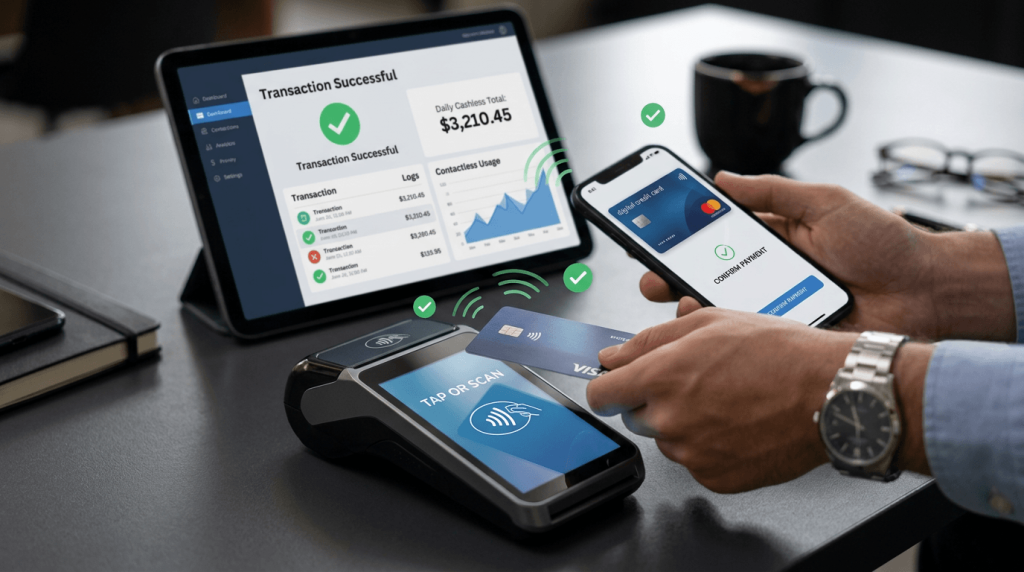
Changing consumer behavior, rapid technological innovation, and the growing demand for faster, more secure payment experiences are driving the rise of cashless transactions. Let’s look at the numbers behind this transformation.
Global Cashless Payment Adoption Statistics
- The global digital payments market is projected to reach US$37.45 trillion in transaction value in 2026 and grow to US$46.25 trillion by 2031.
- Contactless payment for in-store has climbed to 65% among Gen Z and to 53% among U.S. consumers.
- 68% of card transactions are contactless-enabled in the United States, a 10% increase over the past year.
- Contactless payments now account for more than two out of every three in-person transactions globally on Mastercard’s network.
- Digital wallets captured 41% of e‑commerce value and 29% of POS value in Southeast Asia in 2025, with Singapore at 40% of e‑commerce and 36% of POS value.
Digital Wallet & Mobile Payment Statistics
- Global consumers and businesses drove digital payment spending from US$1.7 trillion in 2014 to US$18.7 trillion in 2024, with spending projected to exceed US$33.5 trillion by 2030.
Digital Wallet Trends
| Trends | Why It Matters |
| Mobile wallet adoption continues to grow globally. | Attendees increasingly expect to pay using their phones or wearable devices. |
| Contactless payments are becoming the default for in-person purchases. | Vendors can process more transactions in less time. |
| Consumers are using fewer cash transactions than ever before. | Cashless event infrastructure is becoming a competitive advantage. |
- According to the Worldpay Global Payments Report 2025, cash represented 44% of in-store spending in 2014, but its share fell to 15% by 2024 as consumers shifted toward contactless cards, digital wallets, and other electronic payment methods.
- The number of digital wallet users worldwide is projected to grow from 4.5 billion in 2025 to 6 billion by 2030, a 35% increase.
- Over 5.2 billion people use mobile wallets globally, representing more than 60% of the world’s population.
- China records 96% adult population usage of platforms like Alipay and WeChat Pay, and Asia-Pacific leads adoption with the highest transaction share globally.
Event-Specific Cashless Payment Statistics
- According to Dreamcast’s internal event insights, RFID-powered cashless payment systems can reduce transaction processing time by up to 65% compared to traditional cash payments.
- A large-scale event with 45,000 attendees can process around €2.8 million in onsite transactions, highlighting the need for reliable cashless payment infrastructure during high-volume events.
- According to industry research, 73% of attendees prefer contactless payment methods when available, while 82% of event organizers report improved operational efficiency from digital ticketing and payment consolidation.
- North America represents 28.4% market share, driven by mature payment infrastructure and high consumer trust in digital transactions.
Transaction Speed & Operational Efficiency Statistics
Contactless payments can be completed in seconds, making them among the fastest payment methods for in-person transactions.
- Visa- Contactless Payments
Transaction Speed Benefits
| Cashless Payment Advantage | Impact on Events |
| Faster checkout process | Shorter queues during peak hours |
| Reduced manual cash handling | Quicker vendor operations |
| Digital transaction records | Faster reconciliation after the event |
| Real-time payment processing | Better sales visibility for organizers |
- Mobile payments using smartphones or smartwatches take an average of 14 seconds, while contactless card payments without PIN authentication take around 15.2 seconds.
- The quantitative findings show a 66% prevalence rate for the identified clinical manifestations of PTSD in the participants.
- On any given day, more than 360 million payments move through PhonePe’s network, from street vendors scanning QR codes to online merchants processing cross-border transactions.
- Hybrid payment systems reduce average settlement times from 8.24 seconds down to 4.92 seconds (a 40% speed enhancement).
- Automated workflows deliver up to a 50% cut in transaction costs alongside a 65 percentage-point increase in overall task automation rates.
Security & Fraud Prevention Statistics
Global spending on payment fraud prevention continues to rise as organizations invest in more secure digital payment technologies and fraud detection systems.
Juniper Research- Online Payment Fraud Market
Why Digital Payments Improve Security
| Security Feature | Benefit |
| Encrypted payment processing | Protects payment information |
| Tokenization | Reduces exposure of sensitive card data |
| Digital transaction history | Simplifies audits and reconciliation |
| Real-time monitoring | Helps identify suspicious transactions quickly |
- For every $1 of fraud losses, businesses in the U.S. and Canada incur an average cost of $4.61 due to additional expenses such as investigation, recovery, and operational impact.
- Cashless event payment security significantly reduces physical cash theft and internal shrinkage, showing fraud rates of 0.3% to 0.8% compared to 2.1% to 3.8% for traditional cash management systems.
- Tokenization replaces sensitive primary account numbers (PANs) with unique digital identifiers, rendering intercepted data useless.
- Real-time AI monitoring automatically flags unusual purchasing velocity or abnormal spending behaviors in seconds.
- End-to-end encryption secures data packets moving between point-of-sale (POS) hardware and cloud servers.

RFID & Wearable Payment Statistics
- More than 80% of consumers surveyed have used a smartphone or smartwatch to make contactless payments.
- Dreamcast’s internal event data indicates that events using RFID-enabled cashless payments often experience higher transaction throughout during peak service periods, helping vendors serve more attendees in less time.
- 32.5% access control allocation within event RFID tech deployments are the primary driver before pure payment processing.
- 38.5% music festivals’ share of total event RFID market revenue, leading all other entertainment verticals.
- 35.8% Asia Pacific’s dominant global revenue share for festival RFID solutions.
Future Cashless Payment Market Statistics
- The global wearable payments market was valued at $46.9 billion in 2023 and is projected to reach $393.4 billion by 2033, growing at a CAGR of 23.7%.
- Digital payment transaction value is expected to continue growing at a strong annual rate through 2031, driven by increased smartphone usage and expanding digital payment infrastructure worldwide.
- Total global digital transaction volume is forecasted to reach $37.45 trillion in 2026, climbing towards $46.25 trillion early next decade.
- Digital wallets accounted for 54% of global e-commerce volume and are tracking toward 61%.
Key Takeaways for Event Organizers
The statistics clearly show that cashless payments are becoming an integral part of the modern event experience. As attendee expectations evolve, organizers should focus on building payment experiences that are fast, secure, and easy to use. Here are a few practical steps to consider:
- Offer multiple cashless payment options such as digital wallets, contactless cards, QR codes, and RFID wristbands to cater to different attendee preferences. Just like JLF 2025 did with the help of Dreamcast.
- At JLF 2025, Dreamcast helped manage easy event access, quick cashless transactions, effortless event kit retrieval, and virtual contact sharing. Read more about it here.
JLF 2025: How Dreamcast Powered Access, Networking & Payments with One Smart Badge
- Invest in reliable event technology that combines registration, access control, and cashless payments into a single platform for a smoother attendee journey.
- Use transaction data to improve decision-making, from understanding attendee spending patterns to optimizing vendor operations and inventory planning.
- Plan or get your events planned for scalability, especially if you are managing large conferences, trade shows, or festivals where transaction volumes can spike during peak hours. A reliable event tech partner, like Dreamcast, makes a huge difference.
End Note
Cashless payments are no longer just a convenience. They are becoming a key part of delivering a modern event experience. From faster transactions and shorter queues to improved security and real-time reporting, the benefits extend well beyond payment processing.
As digital payment adoption continues to grow worldwide, event organizers have an opportunity to create more efficient, data-driven, and attendee-friendly experiences.
Whether you are planning a conference, trade show, exhibition, or festival, investing in the right cashless payment solution, like Dreamcast, can help streamline operations while meeting the expectations of today’s digitally connected attendees.
FAQ’s
These trends help organizers understand attendee expectations, improve operational efficiency, reduce queues, and make informed technology investments for future events.
They provide insights into attendee payment preferences, transaction speed, security trends, and spending behavior, helping organizers choose the right payment solutions.
The biggest takeaway is that cashless payments are no longer just a convenience. They are becoming an expectation. Event organizers who adopt secure, fast, and flexible payment technologies will be better equipped to deliver seamless attendee experiences and improve event operations.
Real-time transaction data allows organizers to monitor vendor performance, identify busy sales periods, manage inventory more effectively, and make faster operational decisions during the event.
As digital payments become part of everyday life, attendees increasingly expect fast, contactless, and secure payment options at events, just as they do in retail stores and online.