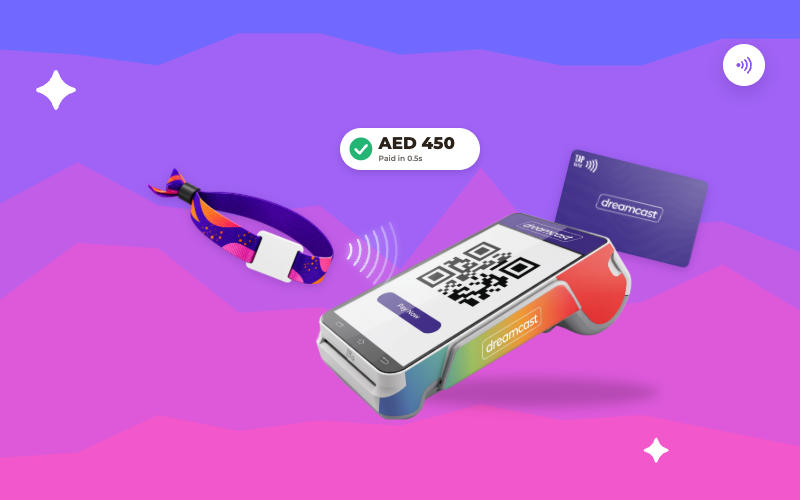



TL;DR
- Cashless payments make it easier for students, parents, and visitors to buy food, merchandise, or activity passes at campus events.
- Organizers spend less time collecting cash, counting money, and arranging change at different counters.
- QR codes, UPI, RFID cards, and NFC-enabled devices give people different ways to pay.
- Digital payment records make it easier to check how much each counter has collected and keep track of transactions.
- The right payment system helps organizers and vendors manage event payments while making purchases simpler for attendees.
Introduction
School and college events bring together students, parents, teachers, vendors, and visitors, often creating a rush at food stalls, merchandise counters, activity zones, and ticket desks. When every purchase involves physical cash, attendees may have to wait in queues, while organizers and staff spend time collecting money, arranging change, and checking payments across different counters.
As digital payments become a regular part of everyday transactions in India, expectations around event payments are changing too. According to the Press Information Bureau, India recorded 22,167.90 crore retail digital payment transactions in FY 2024–25, registering 35.04% year-on-year growth. This wider shift towards digital transactions also highlights an opportunity for educational institutions to rethink how they manage payments during campus events.
Adopting Cashless Payment Solutions for Schools and Colleges can help make these transactions easier to manage, provided the payment method suits the event, its attendees, and its infrastructure. To understand where these solutions fit, let’s first look at what cashless payments involve in an educational setting.
Understanding Cashless Payments at Educational Institutions
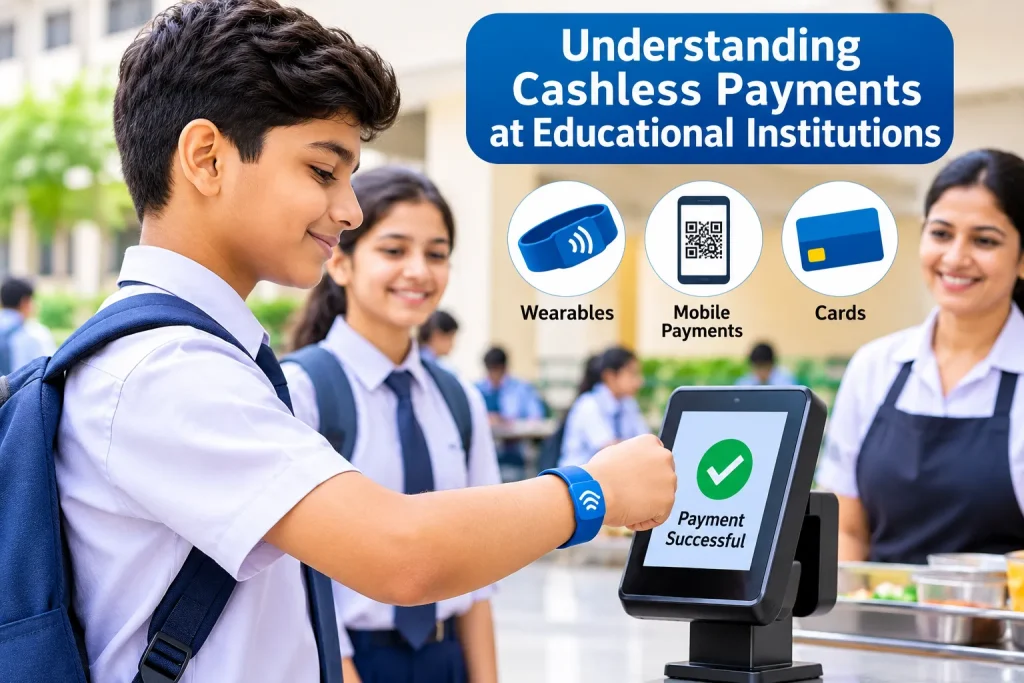
Cashless payments allow students, parents, staff, and visitors to pay for event-related purchases without using physical currency. Depending on the setup, institutions can accept payments through UPI, QR codes, RFID cards, NFC-enabled devices, or event-linked wristbands.
For example, at a school annual function, parents could scan a QR code to pay for refreshments, while students at a college festival could use an RFID card or wristband for purchases at participating stalls. The payment method may differ, but the purpose remains the same: to provide a convenient way to complete transactions while helping organizers keep track of payments.
These Digital campus payments can be arranged around the event’s requirements, whether it involves a few counters at a school function or multiple food, merchandise, and activity stalls at a college festival.
How Cashless Payments Work at Campus Events
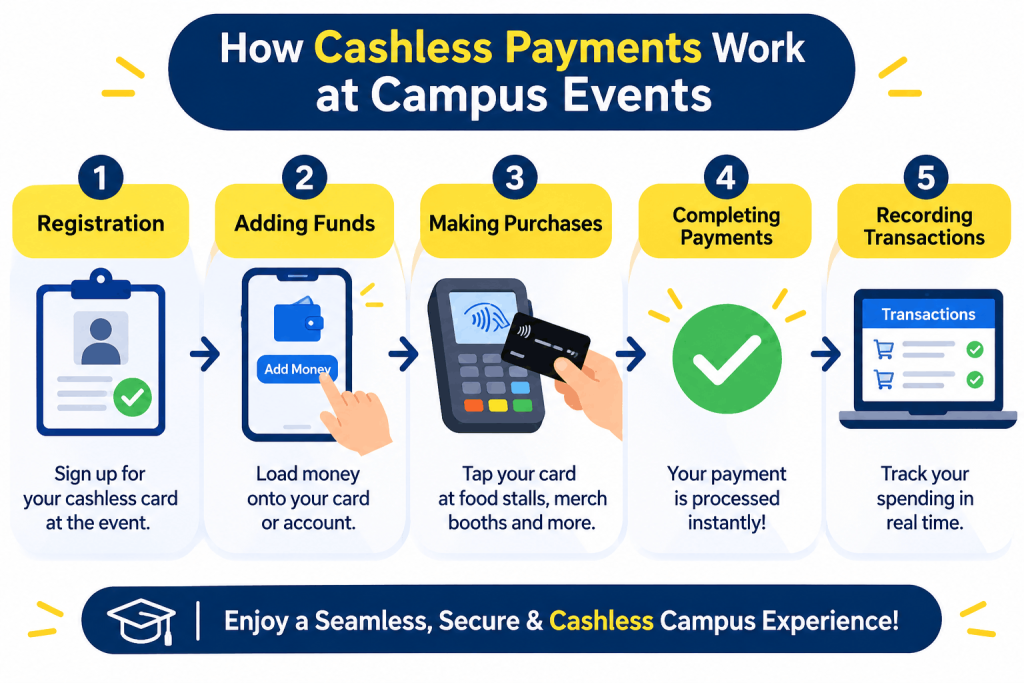
The payment process depends on the technology selected by the institution. A typical event-linked payment system works in the following way:
- Registration: Attendees receive an event-linked card or wristband, where applicable.
- Adding funds: They add money through supported payment methods or designated top-up counters.
- Making purchases: They visit food, merchandise, or activity counters.
- Completing payments: They scan a QR code or tap a compatible card or wristband.
- Recording transactions: Completed payments are recorded digitally for future reference.
For example, students attending a college festival can add funds to their event-linked wristbands and use them to purchase food, drinks, and merchandise.
The exact process depends on the payment technology and infrastructure implemented by the institution.
RFID Wristbands, Cards, NFC and QR Codes: What’s the Difference?
Schools and colleges can choose from different payment technologies depending on their event requirements.
| Payment method | How it works | Where it can be used | Main advantage |
| UPI/QR code | Users scan a code and approve payment through a supported app. | Food and merchandise counters | Familiar and convenient |
| RFID card | A card communicates with a compatible reader using radio waves. | Food counters and activity zones | Convenient for repeated purchases |
| RFID wristband | Users tap a wearable credential against a compatible reader. | College festivals and sports events | Easy to carry |
| NFC payment | Compatible devices communicate over a very short distance. | Supported contactless payment terminals | Quick tap-based interaction |
Understanding the technology: RFID (Radio Frequency Identification) uses radio waves to identify and communicate with a tagged card or wristband. NFC (Near Field Communication) is a short-range communication technology that allows compatible devices to exchange information when brought close together.
Although NFC is related to RFID, the two are not interchangeable. QR codes work differently because they use a camera to read a displayed or printed code.
UPI is also becoming a widely used payment option in India. According to the Ministry of Finance, UPI processed 24,161.69 crore transactions in FY 2025–26, compared with 18,586.60 crore in FY 2024–25. This growing use makes UPI a familiar option for many attendees, although institutions should consider other payment methods too.
Each method has different infrastructure requirements, so institutions should consider these before making a decision.
Key Benefits of Cashless Payments for Schools and Colleges
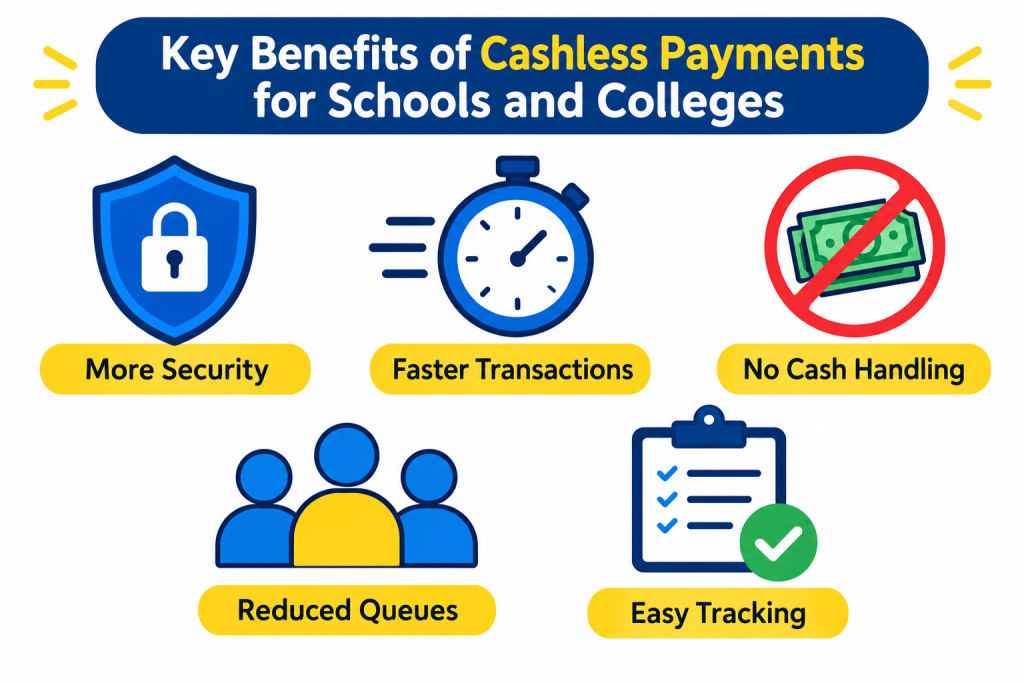
Managing payments across multiple counters can lead to long queues, cash-handling work, and time-consuming calculations. Cashless Payment Solutions for Schools and Colleges help simplify these tasks while making purchases easier for attendees.
Faster Purchases at Food and Merchandise Counters
Food stalls, merchandise counters, and activity zones often get busy during campus events. Digital payments can reduce delays caused by collecting cash and returning change.
For example, parents can pay for refreshments at a school function, while students can purchase food, drinks, and merchandise at a college fest using supported digital payment methods.
A suitable School event payment system can help:
- Reduce dependence on physical cash.
- Speed up payments at busy counters.
- Make purchases easier across stalls.
Less Work Involved in Handling Cash
Managing cash at several counters requires collecting payments, arranging change, maintaining cash boxes, and counting collections. These tasks can become difficult during large campus events.
Digital transactions can reduce this manual work and help organizers:
- Minimise cash counting and change arrangements.
- Simplify coordination between counters.
- Maintain organized payment records.
Better Transaction Tracking and Financial Control
Tracking collections from multiple counters can be time-consuming, especially when organizers rely on handwritten records. Digital payment systems can make it easier to review transaction details and manage event finances.
Depending on the system, organizers may be able to access:
- Transaction histories: Review completed payments.
- Counter-wise collections: Track activity at individual stalls.
- Financial reports: Support post-event reconciliation.
For instance, college organizers can review available payment records from food stalls, gaming zones, and merchandise counters. These records should still be checked against settlements and refunds.
This makes college event cashless payments useful for keeping track of event collections.
A More Convenient Payment Experience for Attendees
Campus events bring together students, parents, teachers, and visitors with different payment preferences. Offering suitable digital payment options can make purchases easier for them.
For example, schools can offer QR-based payments, while college festivals may use event-linked RFID cards or wristbands for repeated purchases.
Institutions should also provide assistance or alternative payment options for attendees who do not have smartphones or are uncomfortable using digital payment apps.
How to Introduce Cashless Payments at Campus Events
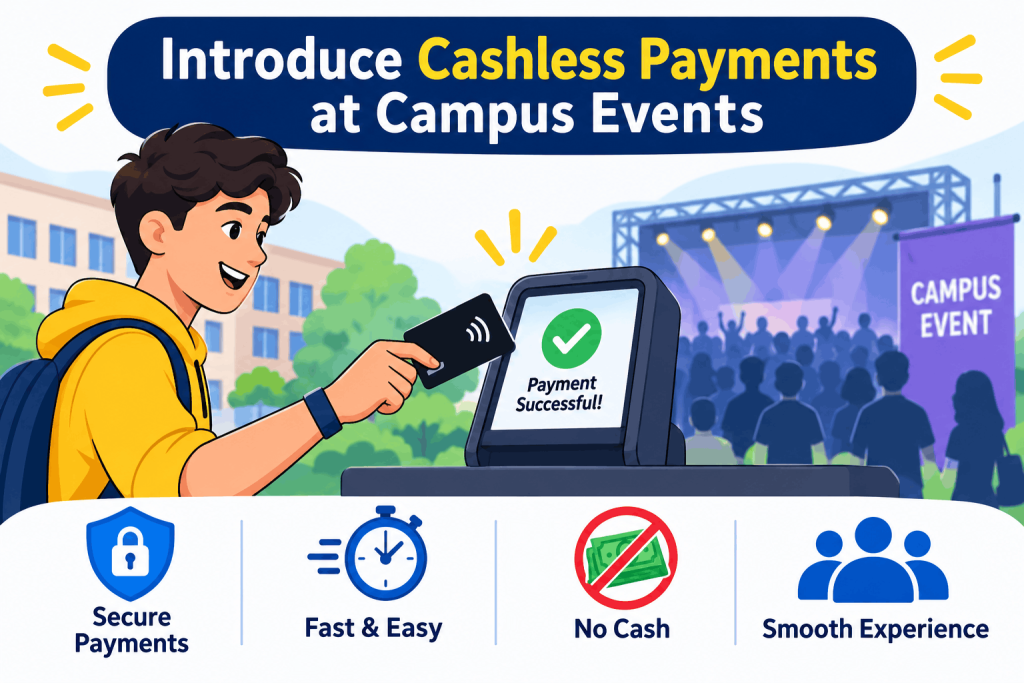
Moving from traditional cash counters to digital transactions requires proper planning. Schools and colleges should select a payment system according to their event size, infrastructure, and attendee requirements.
Here are eight practices that can help make the transition easier.
1. Assess Your Event Requirements
Start by understanding how the event will operate. A small school exhibition with five counters will have different requirements from a three-day college festival involving thousands of attendees.
Consider the expected attendance, number of vendors, payment counters, event duration, and transaction volume before selecting a system.
2. Select the Right Payment Technology
Different events require different payment arrangements. QR codes and UPI may work well for straightforward merchant payments, while RFID cards and wristbands may be useful for repeated purchases across multiple event counters.
Choose a payment system based on ease of use, infrastructure, payment requirements, and event size. If you are considering RFID cards or wristbands, read implementing RFID cashless payments at Events for the practical steps involved in setting them up.
3. Keep the Payment Process Simple
Students, parents, teachers, and visitors should be able to understand the payment process without lengthy instructions.
- Display clear payment instructions near counters.
- Explain how event cards and wristbands work.
- Share information about adding funds and checking balances.
- Make assistance available for first-time users.
4. Prepare Vendors and Event Staff
Train vendors, volunteers, and counter operators before the event. They should know how to accept payments, check transaction status, handle failed transactions, and guide attendees who need assistance.
Assign responsible staff members to monitor payment operations and coordinate with technical support teams.
5. Arrange Connectivity and Backup Support
Digital payments may depend on a stable internet connection. Network interruptions at crowded campuses can affect payment processing.
Before the event, test connectivity at every payment location, arrange backup internet where possible, and establish a process for handling failed or pending transactions.
Also, check whether the selected system supports offline payments and transaction synchronization after connectivity is restored. However, this capability should not be assumed for every QR, UPI, RFID, or NFC arrangement.
6. Follow Payment Security Practices
Institutions should understand how payment information and transaction records are protected.
Some important measures include:
- Use trusted payment providers.
- Restrict dashboard access to authorised staff.
- Monitor unusual payment activity.
- Establish procedures for lost cards or wristbands.
- Follow responsible data-handling practices.
- Maintain clear refund and dispute-handling procedures.
Organizers can also explore Dreamcast’s guidance on cashless payment security for events.
7. Inform Attendees Before the Event
Share payment instructions through registration emails, event websites, campus notice boards, and announcements.
Explain which payment methods are accepted, whether attendees need to add funds in advance, and where they can get assistance.
A short demonstration during student orientation can also help attendees understand the process.
8. Review Transactions After the Event
Once the event ends, review transaction records, compare collections with settlement reports, check refunds, and investigate discrepancies.
Organizers can also identify which counters received more transactions and whether attendees experienced payment-related difficulties. These observations can help improve payment arrangements for future events.
For example, Dreamcast has also shared how cashless payment arrangements are used at sporting events in this example of cashless payments at sporting events. The example can help organizers understand how payment arrangements may work across busy event counters.
Make Campus Event Payments Easier to Manage!
Managing payments should not become another challenge for schools and colleges organizing events. From food stalls and merchandise counters to sports activities and cultural festivals, a well-planned digital payment setup can make transactions easier for attendees and more manageable for organizers.
Adopting Cashless Payment Solutions for Schools and Colleges is a practical step towards reducing dependence on physical cash and improving how campus event payments are managed.
Whether it is a school annual day or a large college festival, the right payment arrangement can make everyday event operations smoother.
Explore Dreamcast Cashless and simplify your event payments!
Frequently Asked Questions
They allow students, parents, and visitors to pay for event purchases digitally instead of using physical cash. Common options include UPI, QR codes, RFID cards, and NFC-enabled payments.
Attendees use an accepted digital payment method or event-linked credential to purchase food, merchandise, and activity passes at participating counters.
Schools can use UPI, QR codes, digital wallets, RFID cards, and supported NFC payment methods. The choice depends on event size and infrastructure.
Yes. They can make repeated purchases convenient, provided the event has compatible readers and a suitable payment system.
They create digital transaction records that help organizers review counter-wise collections, monitor payment activity, and simplify financial reconciliation.