
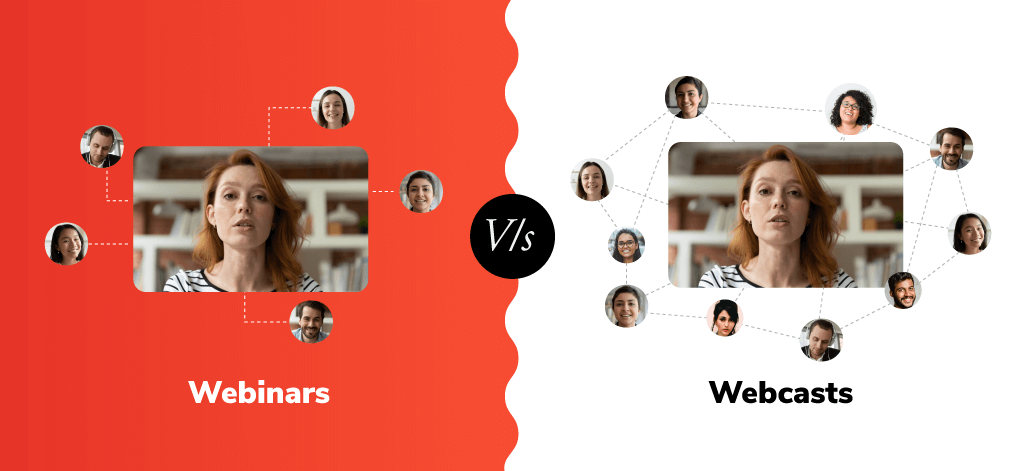

Webcasts and webinars may appear similar, but they are designed for different event objectives. Webinars are ideal for interactive experiences such as training sessions, workshops, product demonstrations, and discussions where attendee participation and engagement are key. Webcasts, on the other hand, are built for large-scale broadcasting, making them well-suited for conferences, product launches, investor relations events, corporate communications, and public announcements.
The right format depends on your audience size, engagement requirements, and event goals. If interaction and audience participation are the priority, a webinar is the better choice. If maximizing reach, scalability, and one-to-many communication is the primary objective, a webcast is typically the more effective solution.
Introduction
Webcasts and webinars are often used interchangeably, but they have different purposes. Webinars focus on interaction and participation, making them perfect for training, workshops, demos, and educational stuff.
Based on the LinkedIn Workplace Learning reports, video remains one of the most consumed learning formats. On the other hand, webcasts cater to bigger audiences and work best for events like town halls, product launches, and conferences. Choosing one comes down to your engagement goals and the format of your content more than the actual technology involved.
When live streaming is considered, people often tend to confuse the webcast and webinar terms and use them interchangeably. Though on a fundamental level, they work similarly, that is on they have somewhat similar execution and purpose, they have some differences as well.
What is a Webcast?
A webcast is usually a unidirectional flow of data, broadcast over the web to an outsized audience. The audience doesn’t typically contribute a lot of to the content of the webcast, which could embrace an audio stream, presentation slides, or video clips.
According to Wyzowl, video remains one of the most preferred content formats among consumers.A webcast is another way during which members of an organization or community can share concepts and knowledge across the world. Webcasting includes a full-featured, high end, multi-camera broadcast designed to inspire and train team members, better communicate concepts and broadcast necessary events live for your company or community.
With the employment of High Definition HD streaming via the web, webcasting permits the presenter to go along with his or her team by sharing his or her visual communication, facial expressions and excitement for the subject at hand. While all members cannot freely raise queries or interact in conversation throughout the complete webcast as they can in a webinar, webcast attendees are able to submit via the internet or call in inquiries to be self-addressed directly by the moderator. This permits for a swish and impactful presentation with the addition of HD cameras, videos and alternative professional graphics to supply a unique expertise which will be both academic and inspirational.
Also Read: How Live Webcast Helps In Product Promotion And Branding?
What is a Webinar?
On the other hand, a webinar is an online interactive meeting or seminar. Additionally, referred to as web conferencing, it permits for cooperative interaction between totally different parties over the phone or a web-based microphone and electronic equipment.
Webinars are designed for smaller teams, from meeting-sized teams to on-line events involving many individuals. The content can likely be academic or training-based. It additionally allows the moderator, or person presenting at the meeting, to share his or her display screen to showcase PowerPoint slides or alternative relevant info. They typically include several of the options out there with online conferences, like Q & A, polls, whiteboard and markup talents or alternative cooperative means.
Thus, webinars are full-featured displays or events for a few hundred or (often) far fewer people. A “webinar” expands the concept of a webcast into a lot of interactive formats. The experience tries to breed the advantages of attending a live seminar.
How do they both differ?
Did you know that, according to HubSpot, live content often generates stronger audience engagement than pre-recorded content? Well, now you do.
Webcasts permit attendees to submit inquiries to be answered by the moderator, whereas webinars usually have very little structure wherever question and answer segments are involved. Both webcasts and webinars permit the presenter to share his or her presentation with the meeting, a webinar is restricted to share solely that that is on his or her monitor, traditionally a PowerPoint presentation, whereas a webcast permits for a custom presentation with slides, videos, photos and graphics designed specifically to accompany the presentation.
Generally, webinars and live conferences are less costly than a standard webcast. However, because the variety of attendees grows for a webinar, thus will the value for added phone lines, correct bandwidth, and therefore the resources required for the meeting. Conversely, a webcast will normally not grow in price because the variety of attendees around the world grows in size. This suggests that the costs of a webinar could be such as the costs of a webcast.
Last Words
The main difference between a webcast and a webinar is how they focus on audience experience. Webinars prioritize interaction, whereas webcasts aim for wider reach. Organizations that pick the right format for audience size, needed engagement, and event goals are more likely to succeed. Instead of debating which format is better, planners should think about which one fits their audience and goals best.
If you want to organize either of them, you need to partner up with a reliable, experienced, and efficient tech solution like Dreamcast. They have 15+ years of experience along with expertise in the industry for handling a large volume of attendees. So, pick your partner wisely for a great attendee experience.
Pick the Best Webinar Services of the Industry

FAQs
Yes, it includes interaction, but it is usually more limited compared to webinars.
Webinars prioritize engagement, while webcasts prioritize reach and scalability.
Webcasts generally support significantly larger audiences.
For large conferences and keynote sessions, webcasts are often the preferred choice.
Yes. Training programs typically benefit from interaction, discussion, and Q&A.
Absolutely. Many modern events combine webinars and webcasts to support different session types.