


TL;DR
Virtual events bring attendees, speakers, exhibitors, and brands together through an online environment instead of requiring everyone to be physically present at the same venue. They can help organizers expand their reach, reduce logistical costs, collect useful attendee data, and offer flexible access to content and networking.
But a successful virtual event needs more than a streaming link. Organizers need the right format, platform, content, engagement strategy, promotion plan, and measurement framework. This guide walks you through everything from planning and promotion to attendee engagement, event analytics, and the virtual event trends shaping 2026.
Introduction
Virtual Event Platforms have undoubtedly become the world’s answer when it comes to organizing any type of event. Mainly because the benefits & advantages of going virtual through advanced event technology are hidden by none.
The global virtual events market was estimated at $119.8 billion in 2025 and is projected to reach $145 billion in 2026. This is why event organizers and planners from diverse industries are shifting to virtual venues to host all forms of events.
Therefore, it would be no mistake to say that knowing all about the virtual events industry is a need of the moment, so you don’t miss out on what the world is heading to! In this blog, we have covered all the essential aspects of a virtual event that you must know.
Go on and dive into the universe of virtual events, or, say, the future of the events industry!
What Is a Virtual Event?
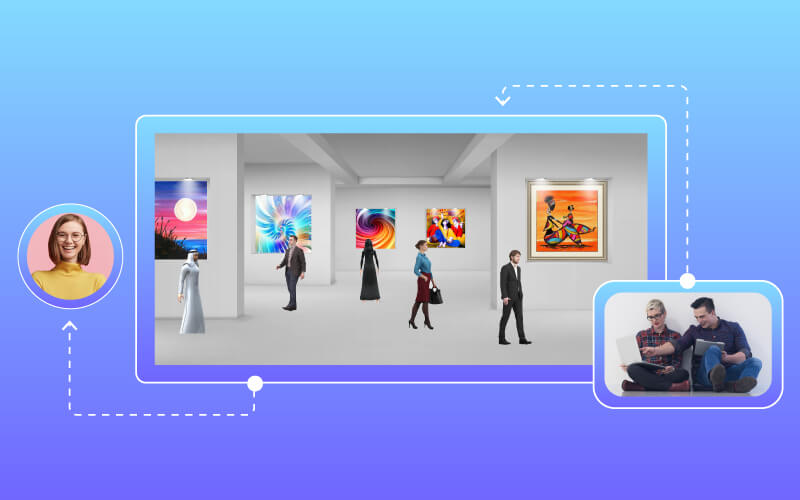
A virtual event is an event hosted online where attendees participate remotely through a digital platform. Instead of traveling to a physical venue, participants can join sessions, interact with speakers, network with other attendees, visit virtual booths, ask questions, and access event content through their devices.
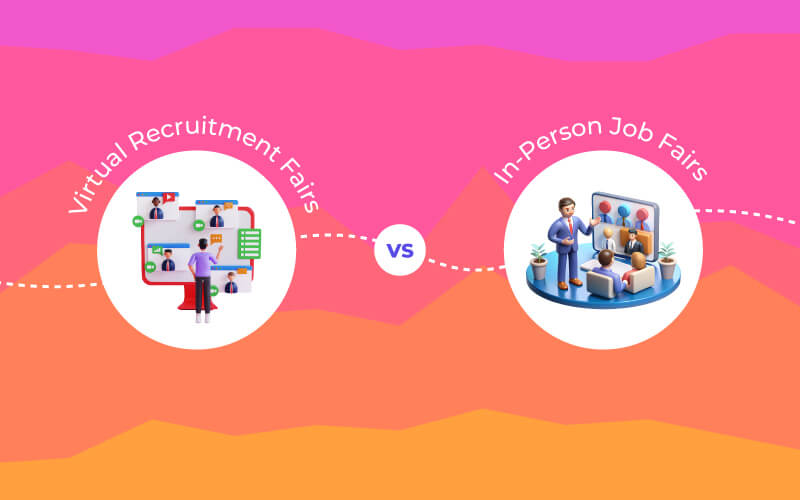
Virtual events can take many forms, including conferences, webinars, product launches, trade shows, exhibitions, networking events, recruitment fairs, AGMs, training sessions, and internal company meetings.
A virtual event platform essentially becomes the venue.
It provides the digital environment where attendees register, enter sessions, interact with other participants, access resources, and engage with the event.
Modern platforms can go beyond simply streaming a presentation. They can offer features such as live audio and video conversations, networking, polls, Q&A, virtual booths, notifications, analytics, customized environments, and on-demand content. Dreamcast’s existing virtual-event material, for example, highlights features such as digital attendee footprinting, networking, browser-based access, customizable environments, and real-time support.
Also Read: Event Industry Statistics: Key Insights for In-Person, Hybrid & Virtual Events
But before choosing technology, there is a more important question to answer.
Why should you host the event virtually in the first place?
What Are the Benefits of Hosting a Virtual Event?
39% of meeting professionals say economic uncertainty is prompting them to plan more virtual meetings.
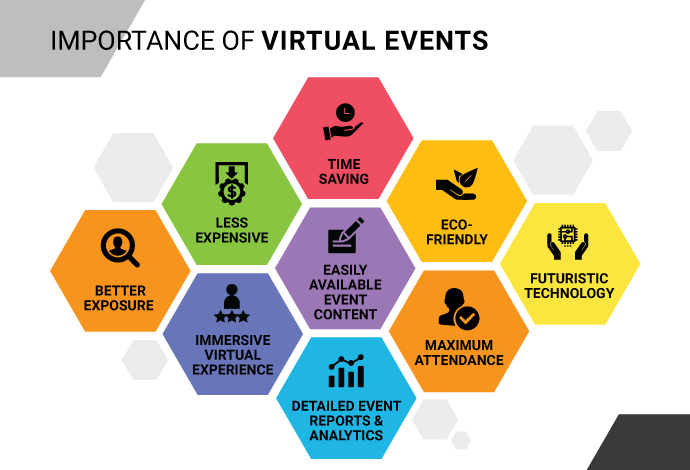
The biggest advantage of a virtual event is that it removes many of the physical limitations associated with traditional events.
Reach a Wider Audience
A physical event is naturally limited by geography, venue capacity, travel requirements, and attendee availability.
A virtual event can bring people together from different cities, countries, and time zones without requiring them to travel.
This makes virtual events particularly useful when your goal is to reach a geographically dispersed audience.
Reduce Event Costs
Virtual events can eliminate or reduce expenses associated with venue hire, accommodation, travel, catering, physical setups, and onsite logistics.
That does not mean virtual events are free. You still need to budget for technology, production, speakers, content, marketing, support, and other services.
However, the overall cost structure can be significantly different from an in-person event.
Make Content Available Beyond the Live Event
One of the biggest advantages of virtual events is that the experience does not necessarily have to end when the live session ends.
Recorded sessions, presentations, documents, and other resources can be made available on demand, allowing attendees to revisit content they found valuable.
Collect More Actionable Data
Digital events naturally generate information about attendee activity.
You can track registrations, attendance, session participation, interactions, content views, networking activity, feedback, and other engagement signals.
This can help you understand what worked and what needs improvement for your next event.
Create More Flexible Experiences
Virtual events can be designed around different attendee needs.
You can offer multiple sessions, on-demand content, networking opportunities, downloadable resources, and interactive features without requiring attendees to physically move between rooms.
Also, 54% of marketers surveyed by Gartner said they were increasing investment in event marketing in the 2023 CMO Spend and Strategy Survey. It could be a great factor to consider virtual events.
Before you take a deep dive into virtual events, you must know the types of virtual events which you can organize.
Types of Virtual Events
33% of exhibition organizers said education/professional development was the top reason people attended virtual events, followed by keeping up with industry trends at 11%.
Virtual events can be of different types, having different scales & goals. However, leading virtual event technology is capable of hosting any type of event that you imagine, with features that you require, on any scale that you need.
Not just this, but organizers or planners from any & every industry can organize their preferred formats of a virtual event.
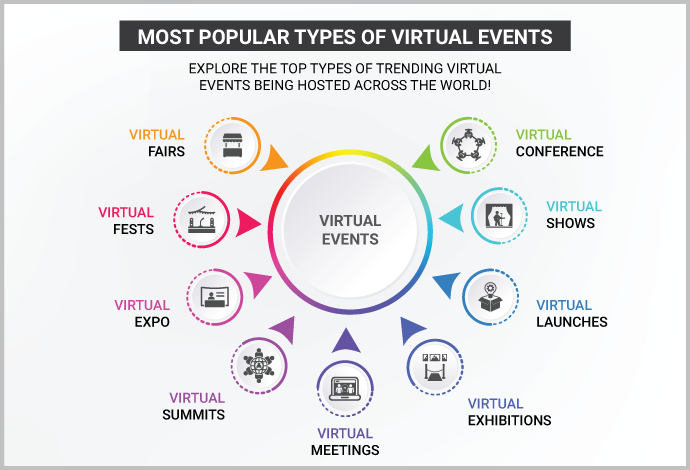
Here are some of the top types of virtual events you can host over an all-in-one virtual event platform:
1. Virtual Conference
A virtual conference refers to an online event dedicated to information sharing related to a common industry background or subject. It lets you organize an informative event with expert speakers & attendees from across the globe. A virtual conference platform is well-resourced with world-class networking & interactive features to help audiences make the most of the event.
2. Virtual Shows
A virtual show is more dedicated to creating an immersive, engagement-driven event to virtually showcase, exhibit, or demonstrate diverse types of products & services. Not just this, but a show can also be related to the goal of celebration or entertainment.
A virtual show platform is well-packed with engaging features like dynamic designs, exhibit booths, social walls, gamification, photo booths, etc. Mentioned below are some of the top types of virtual show events:
- Virtual Trade Show
- Online Award Show
- Virtual Fashion Show
- Online Motor Show
- Virtual Property Show
- Virtual Comedy Show
3. Virtual Launches
Launch events hold great significance for any organization that suffered a lot of hindrance due to the pandemic. An online launch platform enables users to launch their new products or services online, with a comprehensive set of top-notch features to ensure the success of the event.
A virtual launch platform provides users with features like a 360-degree product demonstration, complete product specs, product demo videos, direct website linking, and countless more tools.
4. Virtual Exhibitions
Exhibitions are yet another type of event that focuses on exhibiting & showcasing items to a specific target audience through engaging features and tools.
A virtual exhibition platform is well-equipped with aspects like captivating exhibit booths, external integrations, availability of all necessary documents & content, engagement zones, and a lot more.
An online exhibition can also be from any industry or background, as a highly customizable platform makes it possible to structure the venue based on your brand requirements.
5. Virtual Meetings
Holding meetings is essential for any organization, be it a team meeting or a meeting with international delegates. Just like other events, important meetings & discussions also had to be held because of the pandemic.
However, a virtual meeting platform makes all types of gatherings & vital discussions possible with a safe-to-use & interactive virtual venue, making meetings with global stakeholders absolutely possible.
Mentioned below are some of the top types of meetings you can hold over an online meeting platform:
- Virtual meeting platform
- Virtual Annual General Meeting
- Online Town Hall Meeting
- Virtual Team Meeting
- Online Sales Meeting
- Virtual Corporate Meeting
6. Virtual Fairs
The concept of taking different types of fairs virtual is gaining more and more popularity. This is because the world is acknowledging the efficacy of online fairs, as it has become easy to accomplish goals in a better way while also saving expenses, time, and effort.
A virtual fair is driven by outstanding venue designs, booths, content access, and most of all, networking opportunities & tools. Here are some of the top types of virtual fairs:
- Virtual Fair Platform
- Virtual Career Fair
- Online Job Fair
- Virtual Hiring Fair
- Online Property Fair
- Virtual Education Fair
- Online Trade Fair
7. Virtual Summits
A virtual summit brings the best of industry experts, speakers, and business leaders to share insights on a specific topic or event theme. With the help of a virtual summit, you can easily connect with global specialists without any hassle or extra effort.
A virtual summit platform is well-resourced with features like interaction-driven auditoriums, halls, networking zones, and a lot more.
8. Virtual Expo
A virtual expo enables remote attendees to browse through various expo booths and vendors. An online expo event also brings numerous engaging features & sessions together to make the event memorable for global audiences.
A virtual expo platform is also highly interactive with tools like multi-format communication, gamification, photo booths, a captivating lobby, and a lot more.
9. Virtual Fests
A virtual festival is a highly engaging, entertaining, and interactive event held over an immersive virtual platform.
From education and entertainment to the art and music industry, a background of any and every type can organize its own virtual fest. Not just this, but important occasions, festivals, events, cultural fests, and a lot more can also be celebrated over a virtual fest platform.
Read more about: World’s Top 15 Types of Virtual Events: You Can Choose and Host Accordingly.
Organizing virtual events is one thing, but ensuring their success is another essential aspect. And nothing assures the success of an event like the factor of audience engagement. Hence, let us head towards the way to understand the engagement segment of a virtual event.
So, virtual events clearly offer advantages and types. But does that automatically mean they are the best option?
Not necessarily.
Virtual vs. Hybrid vs. In-Person Events: Which Format Is Right?
According to the Freeman’s GenZ report 2025, 91% of Gen Z professionals say in-person events are among the best ways to build social and interpersonal skills.
The right event format depends on your audience, objectives, budget, content, and the type of experience you want to create.
| Event format | Best suited for | Main advantage | Key limitation |
| Virtual | Webinars, global conferences, training, product launches, online expos | Global accessibility and flexibility | Requires deliberate digital engagement |
| Hybrid | Conferences, expos, corporate events, large gatherings | Combines physical and digital reach | More complex to plan and execute |
| In-Person | Networking-heavy events, festivals, workshops, experiential events | Strong face-to-face interaction | Higher logistical and geographical constraints |
Choose virtual when accessibility, global reach, flexibility, and digital content are your priorities.
Choose in-person when physical interaction and hands-on experiences are central to your event’s purpose.
Do you know that in a CEIR study of exhibition organizers, 68% expected virtual components to become a bigger part of physical events going forward. This is why choose hybrid when you want the energy of an in-person event while still allowing remote audiences to participate.
The important thing is not to choose a format simply because it is popular. Choose the format that supports your event objective.
Know more about: Virtual Events Vs Physical Events: The Definitive Guide
Once you have made that decision, you can start planning.
How to Plan a Virtual Event Step-by-Step
A successful virtual event starts well before the first attendee logs in.
Step 1: Define Your Event Goal
Start with one basic question:
What do you want this event to achieve?
Your goal could be lead generation, education, networking, product awareness, community building, recruitment, customer engagement, or internal communication.
Your objective should influence everything that follows, from your content to your platform and success metrics.
Step 2: Understand Your Audience
Identify who your attendees are, what they expect, where they are located, and what they want from the event.
If your audience spans multiple countries, consider time zones when creating your agenda. Dreamcast’s guidance on virtual-event time zones recommends understanding attendee locations before finalizing event timings and considering shorter or time-zone-friendly programming.
Step 3: Choose the Right Virtual Event Platform
Your platform should support the experience you want to create. Look for capabilities such as:
- Live streaming
- Registration
- Audience interaction
- Networking
- Polls and Q&A
- Virtual exhibitor areas
- Analytics
- On-demand content
- Custom branding
- Attendee support
- Secure access
Do not choose a platform simply because it has the longest feature list. Choose one that your team can actually use effectively.
Step 4: Build a Content-First Agenda
Online attendees have less patience for long, passive sessions.
You need to create a balanced agenda that combines presentations with panels, discussions, Q&A sessions, polls, networking, demonstrations, and other interactive moments.
Step 5: Prepare Speakers and Technology
Your speakers need more than presentation slides.
Conduct rehearsals, test microphones and cameras, check internet connections, confirm screen sharing, and establish a backup plan for technical problems.
Step 6: Test Everything Before Going Live
Run a complete technical rehearsal.
Test registration, login, sessions, chat, networking, polls, recordings, notifications, and attendee support.
A few hours of testing can prevent a much bigger problem during the live event.
Essential Virtual Event Technology & Features
Virtual event technology comes with various world-class tools and features. While selecting a suitable virtual venue for your event, there are some of the most innovative & excellent features that every platform must provide.
Live Streaming and Video
The foundation of most virtual events is reliable live video. Look for high-quality streaming that can support keynote sessions, panels, workshops, product demonstrations, and other formats without unnecessary buffering or interruptions.
Virtual Event Registration
Registration should make it easy for attendees to discover the event, sign up, receive confirmation, and access the event when it goes live.
Ideally, registration data should also connect with your event analytics so you can understand who registered and how different audiences engage with the event.
Virtual Event Networking
Networking features can include one-to-one meetings, networking tables, business-card exchanges, attendee directories, and AI-powered matchmaking.
The technology should make it easier for attendees to find relevant people rather than simply giving them a list of names.
Live Chat, Q&A, Polls, and Quizzes
Interactive tools turn a passive viewing experience into a two-way conversation.
Live chat can facilitate discussion, while Q&A lets attendees interact with speakers. Polls and quizzes can be used to gather opinions, test knowledge, or break up longer sessions.
Virtual Exhibition Booths
For exhibitions, trade shows, and sponsor-led events, virtual booths can provide a dedicated digital space for exhibitors to showcase products, share resources, collect leads, and interact with attendees.
On-Demand Content
Not every attendee can join every session live. On-demand access allows people to watch recordings, revisit presentations, and explore event resources after the live program ends.
It also gives organizers a way to extend the value of their event content beyond a single event day.
Event Analytics and Reporting
Analytics should help organizers understand what is happening before, during, and after the event.
Useful data can include registration numbers, attendance, session participation, engagement, networking activity, content views, and attendee feedback.
This is also where the existing Dreamcast content around digital attendee footprinting and event reports fits naturally.
Customization and Branding
Your virtual venue should feel like an extension of your event brand rather than a generic meeting room.
Look for options to customize branding, landing pages, session areas, banners, virtual booths, navigation, and other attendee-facing elements.
Notifications and Communication
Built-in notifications can help attendees stay informed about upcoming sessions, speaker changes, networking opportunities, announcements, and other event updates.
Accessibility Features
Consider features such as captions, transcripts, accessible navigation, language support, and other tools that make the event easier for different audiences to participate in.
Security and Access Control
Virtual events can involve attendee information, private sessions, business discussions, and proprietary content. Your technology should therefore provide appropriate access controls and security measures.
Mobile and Browser Accessibility
Attendees should ideally be able to join without complicated downloads or technical requirements. Browser and mobile accessibility can reduce friction and make participation easier across devices.
Technical Support
Even the best technology can encounter problems. Reliable technical support for organizers, speakers, exhibitors, and attendees can make a significant difference when something goes wrong.
Also Read: Live Vs. Virtual Events: Exploring Pros, Cons, Top Considerations, and Beyond
How to Choose a Virtual Event Platform
Here’s how you can find your perfect virtual event platform:
1) Flexibility of Customization
The flexibility to customize your event the way you like is a great feature a virtual event platform can provide.
With the help of this feature, event organizers can personalize every aspect of the platform based on their likes & requirements. From choosing the way the virtual venue looks to the touchpoints & color themes, everything can be customized.
2) Top-Notch Audience Engagement Tools
An advanced virtual event platform is well-resourced with top-notch engagement tools. Attendee involvement & engagement are the most significant aspects of any virtual event, as that is what determines its success.
Mentioned below are some of the best virtual event platform features responsible for boosting engagement at your online event:
- Fun Gamification: Numerous games to have fun and earn points
- Social Wall: An engaging wall with all social media posts shared around the event hashtag
- Photo Booth: A photo booth to capture moments in branded frames and share them on social media platforms
- Signature Wall: A virtual wall to write messages and share event experience
- Custom Audio Notifications: Custom audio-based notifications to keep the attendees updated, informed, and engaged throughout the event. It also helps ensure that the user does not miss out on any important aspect of the event.
- Leaderboard: A leaderboard with the names of attendees with the most points. This feature helps in motivating the attendees to participate in various aspects of the event.
3) Innovative Networking Opportunities
Networking is one aspect that every attendee looks forward to in any event. Therefore, it is significant to ensure that a virtual event platform also provides excellent networking opportunities to its users so they can have a valuable experience throughout the event.
Mentioned below are some of the top networking tools provided by an excellent virtual event platform:
- B2B Meeting Schedulers, allowing the audience to book available meeting slots
- AI Matchmaking, Do you know that more than 90% of meeting planners surveyed by PCMA are using AI in some way in their event planning? Because it is helping the attendees to find their matches based on their likes, interests, background, etc.
- Business Card Exchange, so attendees can exchange their contact details easily.
- Networking Tables, where attendees can have valuable interaction with other attendees.
4) Dynamic Designs
An exceptional virtual event platform is well-resourced to provide dynamic design templates & flexibility to the organizers.
The design of a virtual venue helps in creating a life-like experience for virtual event attendees. Hence, make sure you look for a platform that gives beautiful & custom venue templates & designs.
5) Excellent Interactive Features
Interactivity plays a vital role in hosting an engagement-driven event for your audience. The best virtual event platforms know the importance of interactivity at any event. These features help your audience connect & network better.
All in all, any event is incomplete without enough interactive features. Hence, ensure that the virtual event technology provides you with the latest and most effective interactive virtual tools & features.
Mentioned below are some of the top types of interactive tools that you must look for in a virtual event venue:
- Excellent Interactive Features
- Live Polls
- Live Q&A Sessions
- Quizzes & Surveys
- Live Chat
- Multi-Format Communication
- Excellent Networking Tools
6) Multi-Format Content
Displaying & sharing multi-format content effectively adds more value to your virtual event. From background audio to images, GIFs, & videos, a virtual event platform should be capable of displaying the required content items as productively as possible.
A good platform provides you with diverse & dynamic content displays like banners, logos, video demos, sponsored content, ads, and a lot more.
7) Captivating Booth Templates
Booths are another necessary aspect of any event like an exhibition, fair, launch, etc. It is something that has to efficiently represent the brand identity and have a well-thought-out design.
An excellent virtual event platform gives you the liberty to design your own booth or choose from a library of diverse, well-designed templates.
8) 360-Degree Environment
With online events comes the responsibility to create a life-like event experience for the attendees. A 360-degree environment is an innovation that is helping audiences have a matchless experience during a virtual event.
Therefore, look for a platform with the feature of 3D features & a 360-degree environment to boost engagement at your virtual event.
9) Easy Navigation
To create a seamless user experience at a virtual event venue, ensuring the quality of navigation is essential. An experienced virtual event technology provider understands the significance of creating an easy-to-use, understandable, and navigable event platform.
10) Scalability
Another out-of-the-box quality of a virtual event platform is the scalability it provides. The best event technologies give organizers proper flexibility & scalability while planning a virtual event. Not only that, but they also provide the most suitable & productive features based on shared budgets.
How to Keep Virtual Attendees Engaged
Do you know that LinkedIn found that virtual events are most effective when they are around 30–45 minutes long?
This is why getting people to register is only half the challenge.
The bigger question is: How do you keep them interested once they join?
Use Live Polls and Q&A
Instead of asking attendees to passively listen for an hour, give them opportunities to participate.
Live polls, quizzes, and Q&A sessions can make sessions interactive while giving organizers useful feedback.
Dreamcast’s virtual-event engagement resources specifically highlight live polls, quizzes, Q&A, live audio/video chats, social walls, and photo experiences as engagement tools.
Build Networking Into the Agenda
Do you know know that nearly half of event professionals rank peer networking as the No. 1 driver of event success. So, do not just add a networking button and expect attendees to use it.
Create structured opportunities for people to meet, such as one-to-one meetings, group discussions, networking tables, or scheduled appointments.
Offer On-Demand Content
Not every attendee can attend every session live.
Making recordings and resources available on demand gives attendees more flexibility and can extend the lifespan of your event content.
Keep Sessions Interactive
Break up long presentations with questions, demonstrations, polls, discussions, or short activities.
The goal is to make attendees feel like participants rather than viewers.
How to Promote a Virtual Event
Even the best virtual event will struggle if nobody knows about it.
Your promotion strategy should begin well before the event.
Create a Dedicated Registration Page
You should clearly communicate the event’s value, date, time, speakers, agenda, format, and what attendees will gain by attending.
Use Email Marketing
Segment your database where possible and create a sequence rather than sending one announcement.
You can use separate messages for the initial invitation, speaker announcements, reminders, last-chance registrations, and event-day information.
Promote Through Social Media
You must share speaker clips, agenda highlights, questions, statistics, short videos, and behind-the-scenes content to build interest.
Encourage speakers and partners to promote the event through their own networks as well.
Use the Registration Data
Registration data can help you understand which audiences are showing interest and where your promotion is working.
This allows you to refine your messaging rather than relying entirely on assumptions.
How to Measure Virtual Event Success
Attendance alone does not tell you whether a virtual event succeeded.
Always start by connecting your metrics to the goal you established at the beginning.
Registration and Attendance
You need to track:
- Total registrations
- Attendance rate
- No-show rate
- Geographic distribution
- New versus returning attendees
- Engagement
Also, look at:
- Session attendance
- Average viewing time
- Poll participation
- Q&A activity
- Chat activity
- Networking interactions
- Content downloads
- Content Performance
Identify which sessions received the most views, which recordings were watched later, and where attendees dropped off.
This can help you understand what content deserves more attention in future events.
Business Outcomes
If your goal is commercial, measure outcomes such as leads generated, meetings booked, qualified prospects, conversions, or revenue influenced by the event.
Attendee Feedback
You should ask attendees what they liked, what they struggled with, and what they would change.
The strongest measurement approach combines quantitative data with qualitative feedback.
The events industry is increasingly shifting toward proving value rather than simply reporting event scale, making meaningful outcome measurement particularly important in 2026.
Virtual Event Trends to Watch in 2026
Based on a PCMA Convene report, 28% of event professionals expect digital attendees to grow in 2026, compared with 15% who said the same in the previous year’s survey.
Virtual events are no longer simply about putting an in-person event online. The experience is becoming more personalized, data-driven, and intentional.
AI-Powered Personalization
AI is increasingly being used to recommend content, improve networking, assist attendees, and create more personalized journeys.
Current 2026 event research identifies AI-powered personalization as a major opportunity, while PCMA research also states 65% of event professionals use AI, up from 62% the previous year.
More Structured Networking
Simply giving attendees access to a networking area is not enough.
Organizers are increasingly designing intentional networking opportunities, with research showing that peer networking is a major driver of event success.
Better Event Analytics
Organizers want to understand not just who attended, but what attendees actually did.
That means deeper engagement data, attendee journeys, content performance, and business outcomes will become increasingly important.
Accessibility as Part of Event Design
Captions, translations, accessible content, and inclusive digital experiences are becoming part of thoughtful event design rather than an afterthought. AI-assisted captioning and translation are also emerging as tools for improving accessibility.
More Intentional Digital Experiences
The focus is moving away from simply adding more technology.
The better question is: Does this technology make the attendee experience better?
That means using AI, networking tools, analytics, and interactive features where they solve a genuine attendee or organizer problem.
75% of global event marketers said they planned to continue running virtual events long term, according to LinkedIn’s State of Virtual Events research. This makes it more relevant than ever.
Virtual Event Checklist
Before you go live, use this quick checklist:
Before the Event
- Define your event objective
- Identify your target audience
- Choose the event format
- Select your virtual event platform
- Finalize speakers and sessions
- Build the registration page
- Create your promotional campaign
- Prepare accessibility requirements
- Rehearse speakers
- Test the complete attendee journey
During the Event
- Monitor technical performance
- Track attendance and engagement
- Moderate chat and Q&A
- Support attendees
- Monitor speakers and sessions
- Encourage networking
- Collect feedback
After the Event
- Share recordings and resources
- Send follow-up communication
- Review attendance and engagement data
- Analyze session performance
- Follow up with leads
- Review attendee feedback
- Compare results against your original goals
- Document lessons for the next event
End Notes
A successful virtual event is much more than a video call or livestream.
It is a complete digital experience that starts with a clear objective and continues through registration, content, networking, engagement, promotion, analytics, and post-event follow-up.
The technology matters, but it should support the experience rather than become the experience.
You need to start by understanding your audience and deciding what you want to achieve. Then choose the format and platform that support those goals. Dreamcast builds interactive content, gives attendees meaningful reasons to participate, promotes the event strategically, and measures the outcomes that actually matter.
As virtual events continue to evolve in 2026, the winning approach will not necessarily be the event with the most technology.
It will be the one that uses the right technology to create a more useful, accessible, personalized, and measurable experience.
FAQs
A virtual event allows organizations to bring audiences together online for activities such as learning, networking, product launches, conferences, exhibitions, recruitment, or business communication without requiring everyone to attend a physical venue.
Virtual events can expand audience reach, reduce some physical-event costs, offer flexible access to content, simplify participation across locations, and provide detailed digital engagement data.
Start with your event goals and audience requirements. Then evaluate the platform’s registration, streaming, networking, engagement, analytics, customization, accessibility, security, integrations, and support capabilities.
Use interactive sessions, live polls, Q&A, quizzes, networking, chats, demonstrations, and on-demand resources. Most importantly, avoid making the entire event a sequence of long, passive presentations.
Measure success against your original objective. Depending on your goal, this may include attendance, engagement, session participation, networking, leads, conversions, content consumption, attendee satisfaction, or ROI.
Yes. Virtual participation continues to have a role in event strategies, particularly for audiences spread across locations and for organizations looking for flexible digital participation. At the same time, 2026 event strategies are increasingly focused on intentional design, personalization, AI, measurement, and meaningful connections rather than technology for its own sake.