

TL;DR Verdict
Live video streaming is no longer just about broadcasting content. It’s about creating interactive, scalable, and measurable audience experiences. The most successful live streaming for events combines reliable technology, audience engagement features, high-quality production, and actionable analytics.
Organizations that treat live streaming as a strategic communication channel rather than a technical setup are more likely to increase participation, improve attendee satisfaction, and achieve stronger event outcomes.
Introduction
In this digital world, the way we interact and communicate with one another is always changing as social media platforms become an essential part of our daily lives. Live video streaming was one of the top social media trends in 2019. Did you know that video remains one of the most effective content formats for learning and knowledge transfer? This trend has changed the way people interact and experience online events such as live concerts and football games.
The most popular live streaming activity is still live video gaming, but content producers are always coming up with new ideas for what they may share via live streams, such as cooking demonstrations, live music performances, or even just their own thoughts. Live streaming gives you the chance to share whatever you are going through with a specific audience in real-time, whether it’s a live event online or a showcase of your life.
Media outlets with the technology to transmit live to their audiences were the only ones who could do this in the past. Based on the report by McKinsey, organizations continue investing heavily in digital transformation initiatives. However, live streaming technology has exploded on the internet in recent years, and an increasing number of individuals are producing and receiving that live experience from the comfort of their homes. Now, sharing information and knowledge has gotten more affordable (for both individuals and businesses).
Most businesses and brands are using live video streaming services in order to expand their audience base, increase viewership, boost audience engagement, improve brand awareness, and more. In this blog, we will discuss live video streaming and its benefits. It will also provide more information about live video broadcast services for readers who haven’t kept up with them during their period of exponential growth.
Connect with the Industry's Most Experienced
Live Streaming Service Providers.
What is live streaming?
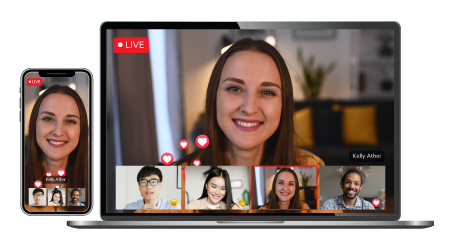
Live streaming is a process of broadcasting any media content (recorded or live) to people via the internet in real-time. In simple words, this technology allows people to create, watch, and share videos in real-time. Movies, podcasts, music videos, and webcasts are famous examples of streaming content. Consumers increasingly value seamless digital experiences by improving streaming quality, accessibility, and reliability, which directly impacts audience satisfaction.
Marketers use an array of streaming devices in order to broadcast live-streamed video to the targeted audience. A stable internet connection, a live streaming platform, and internet-enabled devices are required to conduct live streaming.
According to the Global Overview Report, mobile devices account for a significant share of global internet traffic. With lockdowns connected to COVID-19 during the past year, the usefulness of live streaming technology has been made clear to the globe. A live streaming service enables groups to remain connected and communicate safely regardless of distance, pandemic, or climate.
Also Read: 10 Key Benefits of YouTube Live Video Streaming

What Makes a Live Video Streaming Event Successful?
Based on the report by Wyzowl, 91% of businesses use video as a marketing tool. Many organizations assume that live video streaming simply involves turning on a camera and broadcasting content. In reality, successful live streaming requires careful planning around audience engagement, production quality, accessibility, and reliability.
- The first consideration is audience expectations. Modern viewers expect professional-quality streams, clear audio, minimal buffering, and easy access from any device. Even the most valuable content can lose impact if technical issues disrupt the viewing experience.
- Second, event organizers must think beyond broadcasting. Successful live streaming for events includes interactive features such as live Q&A, polls, chat, networking lounges, downloadable resources, and audience feedback mechanisms. These features transform passive viewers into active participants.
- Third, scalability matters. A streaming setup that works for 100 viewers may struggle with 10,000 viewers. Organizations should evaluate whether their video streaming solutions can support peak traffic without compromising quality.
- Another often-overlooked factor is content repurposing. Live events generate valuable content that can be reused long after the broadcast ends. Session recordings, highlight clips, speaker interviews, and on-demand libraries can extend event reach and provide ongoing value.
- Finally, organizations should measure success through data. Metrics such as attendance, watch time, engagement rates, drop-off points, and lead generation provide insights that help improve future events.
The most successful live streaming programs treat streaming as a strategic engagement channel rather than simply a broadcasting tool.
The Timeline of How We Got to Where We are Today
It’s critical to examine the history and evolution of streaming in order to completely comprehend how live streaming software has grown. You can better grasp the development of live streaming technology by reading the following details.
- 1993: It started with a misguided attempt at a live internet recording by some IT firm, which consumed half of the Internet’s available bandwidth.
- 1994: To promote their music to millions of streamers, the New York Times used the Rolling Stones as “the rock band”.
- 2005: To enable individuals to connect through videos, YouTube was created. Around the time the service started to become popular, Saturday Night Live (SNL) released its first video clip there that same year.
- 2007: The Justin. The TV streaming service went live. It would eventually become the well-known live-streaming service owned by Amazon.
- 2008: YouTube Live was the platform’s first live event. Live streaming on mobile devices is now possible for producers with more than 1k subscribers on their channel.
- 2011: The launch of Prime Video by Amazon
- 2013: The launch of the first-generation Chromecast by Google
- 2015: Standalone streaming was launched by HBO
- 2017: Apple TV+, YouTube TV, and Disney+ jumped on live.
- 2018: HBO Max with more content, and Peacock (from NBCUniversal) joined the party.
- 2021: According to the B2B software search firm, the streaming industry reached $70 billion
Read more about: Twitter Live Video Streaming: The Ultimate Guide
Today’s Live Streaming Industry
Did you know that the global video streaming market is projected to grow significantly over the coming years? Today, anyone can pick up their phone and go live on platforms like Instagram Live, YouTube, LinkedIn, and Dreamcast! Individuals may follow their passions, stream live content, and earn money by doing it. When compared to offline gatherings, live streaming allows people with related interests to meet virtually. Without a capacity restriction, everyone can participate in designing the framework for the future of music, gaming, and entertainment in general.
Famous video streaming services today include YouTube, Twitch, Peacock, Netflix, Hulu, HBO Max, Disney+, Apple TV+, and Amazon Prime Video.
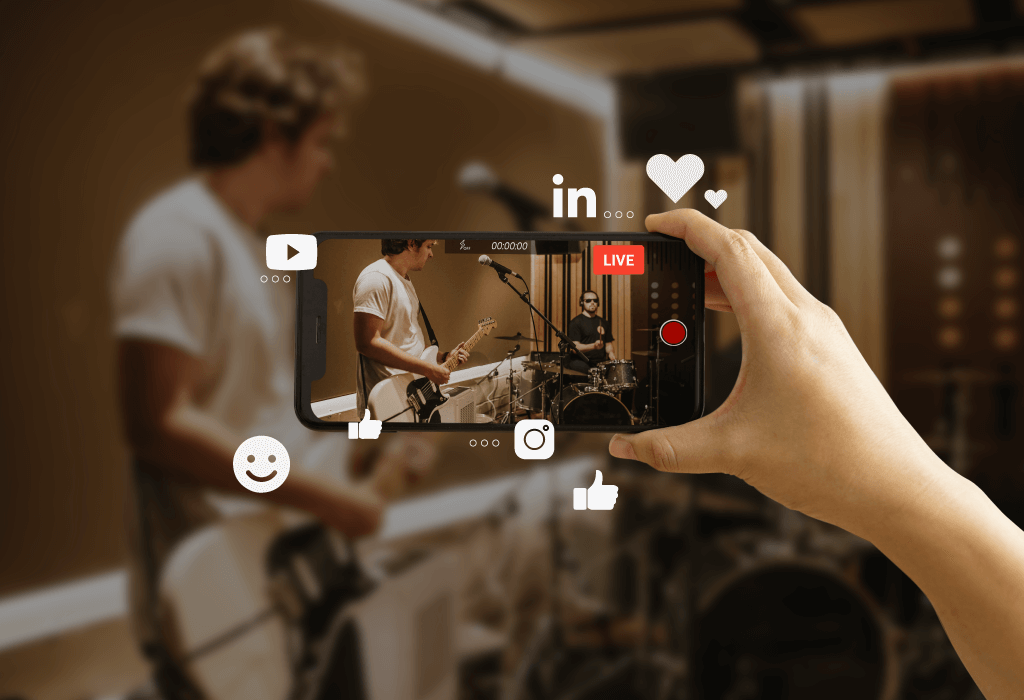
How Does it Work?
Media items like audio, video, and other forms are organized beforehand and sent in sequential order so they may stream instantly. Media files, on the other hand, are automatically removed after being played, in contrast to conventional downloads, which are retained on your device.
For remote event attendance, remote learning, and business, live streaming is an essential tool. This technology works by transmitting multimedia content to the audience through different streaming protocols without any video latency. RTMP, WebRTC, and HLS act as essential delivery vehicles in order to transmit multimedia content over the internet.
In order to transmit high-quality video and audio to targeted audiences, different live streaming equipment, a live video streaming platform, and a series of protocols are required. Live streaming includes the following technical steps:
- Experts use high-quality webcams or cameras to capture video
- They use an encoder (to convert raw files to streamable formats)
- Send the streamable video into the live video streaming platform or CDN via RTMP.
- Utilize CDN and HLS to deliver the video to a viewer-side HTML5 video player.
Live video streaming is profitable for organizations and businesses because it allows attendees to join their online events regardless of location. It also helps the brands to improve their brand awareness, reach a wide audience, promote the product, and generate leads cost-effectively. Some common use cases of live streaming include:
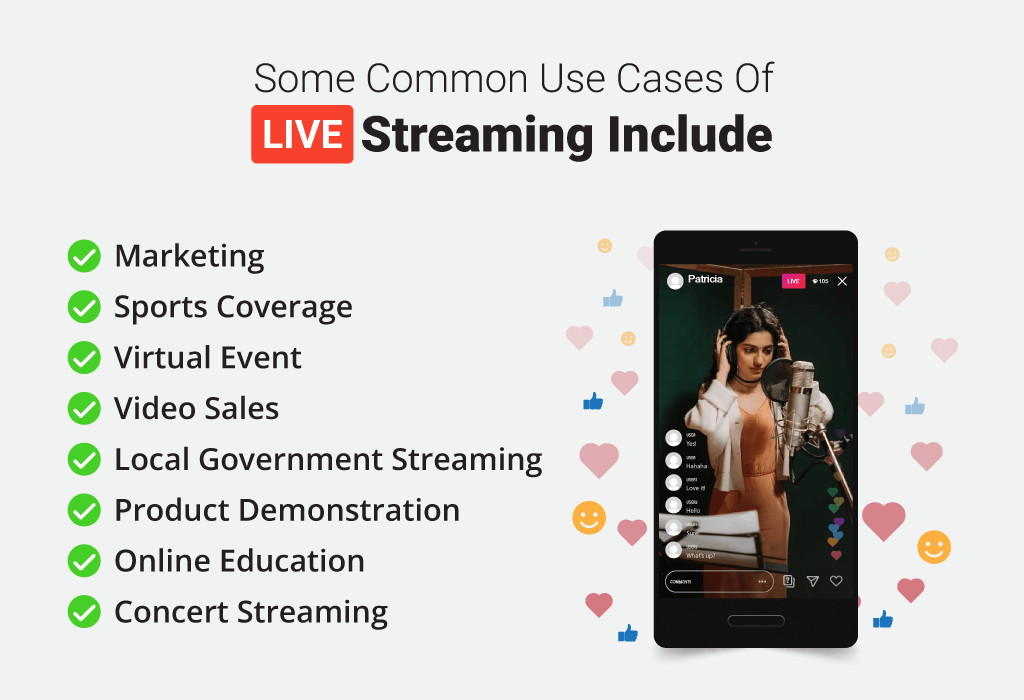
- Marketing
- Sports coverage
- Virtual event
- Video sales
- Local government streaming
- Product demonstration
- Online education
- Concert streaming, etc.
When it comes to streaming a live video, the possibilities are endless. You can use live streaming technology in a creative way for your brand or business in order to gain more audience and generate good revenue.
Connect with the Industry's Most Experienced
Live Streaming Service Providers.
“Organizations often focus on cameras and bandwidth, but successful live streaming depends on audience engagement. The most effective broadcasts are designed around participation, accessibility, and measurable outcomes—not simply content delivery.”
— Digital Events & Streaming Consultant
Advantages of Live Streaming With a Professional Service
There are different benefits of using live video streaming services, and some of them are given below:
- Platforms for live streaming assist in achieving high-quality streaming.
- Live streaming gives you the chance to reach a larger audience because you are not constrained by size or location.
- It gives you the freedom to use a variety of multimedia content, such as texts, pictures, videos, and more.
- Platforms for live broadcasting are simple to use.
- You may view the analytics of events that are being live broadcast thanks to the live streaming service provider.
- Live streaming platforms provide customer support to resolve technical problems.
- CDNs ensure reliable content delivery to viewers.
- A low-cost method of raising brand awareness and promoting your product or service is live streaming.
- Different tools are available on streaming platforms for monetizing content.
- Professional live streaming platforms such as Dreamcast allow the integration of marketing tools.
Live streaming is an essential and powerful tool that allows businesses to connect with a wide audience to share information, boost awareness, promote products or services, and generate leads. Are you searching for the best live video streaming platform to broadcast your video? If yes, Dreamcast can be an ideal solution for you. We offer a high-quality and end-to-end streaming platform with video monetization and on-demand capabilities.
Wrapping Up
Live video streaming has evolved from a simple broadcasting tool into a strategic channel for events, conferences, product launches, training programs, webinars, and corporate communications. Success depends on much more than video delivery. It requires reliable infrastructure, audience engagement, analytics, scalability, and operational expertise.
This is where Dreamcast helps organizations deliver impactful streaming experiences. From virtual and hybrid events to large-scale conferences and business summits, Dreamcast combines enterprise-grade live streaming, audience engagement tools, registration systems, networking capabilities, event apps, analytics, and dedicated support into a single ecosystem.
Whether you are hosting a leadership town hall for hundreds of attendees or a global virtual event reaching thousands across multiple countries, Dreamcast provides the technology and operational expertise needed to ensure a seamless experience from registration to post-event reporting.
The organizers who achieve the best results from live streaming are not necessarily those with the biggest budgets. They are the ones that partner with experienced event technology providers capable of delivering reliability, engagement, and measurable outcomes at scale.
Connect with the Industry's Most Experienced
Live Streaming Service Providers.
FAQs
Look for scalability, reliability, audience engagement features, analytics, security, and technical support rather than focusing only on pricing.
Use live Q&A, polls, chat, networking opportunities, and interactive content throughout the session.
Bandwidth requirements depend on video quality, audience size, and streaming configuration. Always maintain a buffer above the minimum requirement.
Conduct rehearsals, test equipment, prepare backup internet connections, and have technical support available during the event.
Choose live streaming when real-time interaction matters. Choose on-demand video when flexibility and content consumption are the primary goals.
Track registrations, attendance, watch time, engagement levels, interaction rates, lead generation, and audience feedback.